


Page 760 - Williams Hematology ( PDFDrive )
P. 760
734  Part VI:  The Erythrocyte                 Chapter 48:  The Thalassemias: Disorders of Globin Synthesis           735


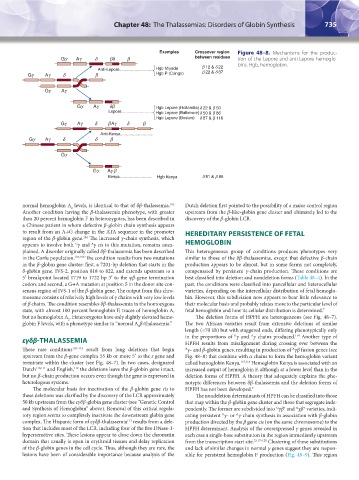
                                                                                          Figure 48–8.  Mechanisms for the produc-
                                                                                          tion of the Lepore and anti-Lepore hemoglo-
                                                                                          bins. Hgb, hemoglobin.


                  normal hemoglobin A  levels, is identical to that of δβ-thalassemia.    Dutch deletion first pointed to the possibility of a major control region
                                                                   103
                                  2
                  Another condition having the β-thalassemia phenotype, with greater   upstream from the β-like-globin gene cluster and ultimately led to the
                  than 20 percent hemoglobin F in heterozygotes, has been described in   discovery of the β-globin LCR.
                  a Chinese patient in whom defective β-globin chain synthesis appears
                  to result from an A→G change in the ATA sequence in the promoter   HEREDITARY PERSISTENCE OF FETAL
                  region of the β-globin gene.  The increased γ-chain synthesis, which
                                      104
                  appears to involve both  γ and  γ cis to this mutation, remains unex-  HEMOGLOBIN
                                         A
                                    G
                  plained. A disorder originally called δβ-thalassemia has been described   This heterogeneous group of conditions produces phenotypes very
                  in the Corfu population. 105,106  The condition results from two mutations   similar to those of the δβ-thalassemias, except that defective β-chain
                  in the β-globin gene cluster: first, a 7201-bp deletion that starts in the   production appears to be almost, but in some forms not completely,
                  δ-globin gene, IVS-2, position 818 to 822, and extends upstream to a   compensated by persistent  γ-chain production. These conditions are
                  5′ breakpoint located 1719 to 1722 bp 3′ to the ψβ-gene termination   best classified into deletion and nondeletion forms (Table 48–4). In the
                  codon; and second, a G→A mutation at position 5 in the donor site con-  past, the conditions were classified into pancellular and heterocellular
                  sensus region of IVS-1 of the β-globin gene. The output from this chro-  varieties, depending on the intercellular distribution of fetal hemoglo-
                  mosome consists of relatively high levels of γ chains with very low levels   bin. However, this subdivision now appears to bear little relevance to
                  of β chains. The condition resembles δβ-thalassemia in the homozygous   their molecular basis and probably relates more to the particular level of
                  state, with almost 100 percent hemoglobin F, traces of hemoglobin A,   fetal hemoglobin and how its cellular distribution is determined. 7
                  but no hemoglobin A . Heterozygotes have only slightly elevated hemo-  The deletion forms of HPFH are heterogeneous (see Fig. 48–7).
                                 2
                  globin F levels, with a phenotype similar to “normal A β-thalassemia.”  The two African varieties result from extensive deletions of similar
                                                         2
                                                                        length (<70 kb) but with staggered ends, differing phenotypically only
                                                                        in the proportions of  γ and  γ chains produced.  Another type of
                                                                                              A
                                                                                         G
                                                                                                             114
                  εγδβ-THALASSEMIA                                      HPFH results from misalignment during crossing over between the
                  These rare conditions 107–113  result from long deletions that begin   A γ- and β-globin genes, resulting in production of  γβ fusion genes (see
                                                                                                            A
                  upstream from the β-gene complex 55 kb or more 5′ to the ε gene and   Fig. 48–8) that combine with α chains to form the hemoglobin variant
                  terminate within the cluster (see Fig. 48–7). In two cases, designated   called hemoglobin Kenya. 115,116  Hemoglobin Kenya is associated with an
                                   112
                  Dutch 110,111  and English,  the deletions leave the β-globin gene intact,   increased output of hemoglobin F, although at a lower level than in the
                  but no β-chain production occurs even though the gene is expressed in   deletion forms of HPFH. A theory that adequately explains the phe-
                  heterologous systems.                                 notypic differences between δβ-thalassemia and the deletion forms of
                     The molecular basis for inactivation of the  β-globin gene  cis to   HPFH has not been developed. 7
                  these deletions was clarified by the discovery of the LCR approximately   The nondeletion determinants of HPFH can be classified into those
                  50 kb upstream from the εγδβ-globin gene cluster (see “Genetic Control   that map within the β-globin gene cluster and those that segregate inde-
                  and Synthesis of Hemoglobin” above). Removal of this critical regula-  pendently. The former are subdivided into  γβ  and  γβ  varieties, indi-
                                                                                                       G
                                                                                                                +
                                                                                                              A
                                                                                                         +
                  tory region seems to completely inactivate the downstream globin gene   cating persistent  γ- or  γ-chain synthesis in association with β-globin
                                                                                         A
                                                                                     G
                  complex. The Hispanic form of εγδβ-thalassemia  results from a dele-  production directed by the β gene cis (on the same chromosome) to the
                                                     113
                  tion that includes most of the LCR, including four of the five DNase-1-  HPFH determinant. Analysis of the overexpressed γ genes revealed in
                  hypersensitive sites. These lesions appear to close down the chromatin   each case a single-base substitution in the region immediately upstream
                  domain that usually is open in erythroid tissues and delay replication   from the transcription start site. 7,117–120  Clustering of these substitutions
                  of the β-globin genes in the cell cycle. Thus, although they are rare, the   and lack of similar changes in normal γ genes suggest they are respon-
                  lesions have been of considerable importance because analysis of the   sible for persistent hemoglobin F production (Fig. 48–9). This region
          Kaushansky_chapter 48_p0725-0758.indd   735                                                                   9/18/15   2:57 PM

