


Page 111 - Clinical Immunology_ Principles and Practice ( PDFDrive )
P. 111
CHaPter 6  Overview of T-Cell Recognition                95


                 β-lactam ring                                      Coupling of a pathogen-derived carbohydrate to another
                                 S   CH
                CH –CO–NH– CH  CH  C  CH 3 3                      foreign protein forms the basis of conjugate vaccines, used to
                  2
                                                                  elicit neutralizing antibody responses to bacteria (Chapter 90).
                                                                  Because related bacterial strains can display distinct polysac-
                          C   N    C COOH                         charide structures that can be recognized by the B cells in the
           Penicillin G  C         H                              host (serotypes), some conjugate vaccines couple multiple distinct
                     Nucleophilic attack                          polysaccharides to a single carrier protein. A classic example is
                          OH                                      Prevnar® 13, which is composed of polysaccharides from 13
                                                    S             different serotypes of Streptococcus pneumoniae that are conjugated
           Native self protein      CH –CO–NH– CH  CH  C  CH 3    to a highly immunogenic inactivated diphtheria toxin protein.
                                     2
                                                        CH
                            +                             3       The conjugate vaccine offers distinct epitopes for the respond-
                         NH 3
                                             C    N   C COOH      ing B-cell and CD4 T-cell helpers (see Fig. 6.1). The clonally
                                           C   O      H           distributed B-cell Ig receptor binds to the polysaccharides, whereas
                                                                  the protein carrier provides peptides to be presented on the
                                                    Modified      surface of the priming dendritic cell (DC) and the antigen-reactive
                                                    peptide       B cell. This allows focused help by the antigen-specific CD4
                         Adduct                     epitope
                        formation         NH                      T cell.
                                  H            O                    For viral glycoproteins, B cells and CD4 T cells often recognize
                             COOH C    NH    C                    distinct sites on the same protein, with the B cell focusing on
                                                                  the surface regions of the intact protein structure and the T
                               CH 3                               cell recognizing peptides produced after internalization and
                                                 2
                               CH 3  C  S  CH  CH–CH –CO–NH       degradation.
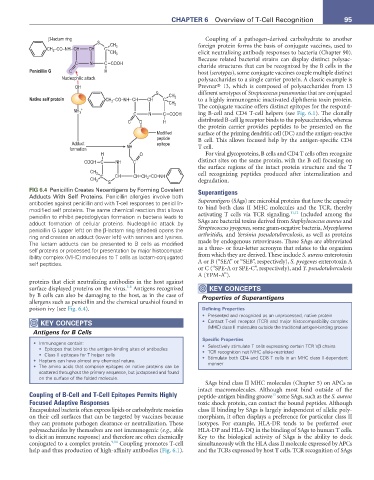
           FIG 6.4  Penicillin Creates Neoantigens by Forming Covalent   Superantigens
           Adducts With Self Proteins. Penicillin allergies involve both
           antibodies against penicillin and with T-cell responses to penicillin-  Superantigens (SAgs) are microbial proteins that have the capacity
           modified self proteins. The same chemical reaction that allows   to bind both class II MHC molecules and the TCR, thereby
                                                                                                11,12
           penicillin to inhibit peptidoglycan formation in bacteria leads to   activating T cells via TCR signaling.   Included among the
           adduct formation of cellular proteins. Nucleophilic attack by   SAgs are bacterial toxins derived from Staphylococcus aureus and
           penicillin G (upper left) on the β-lactam ring (shaded) opens the   Streptococcus pyogenes, some gram-negative bacteria, Mycoplasma
           ring and creates an adduct (lower left) with serines and lysines.   arthritidis, and Yersinia pseudotuberculosis, as well as proteins
           The lactam adducts can be presented to B cells as modified   made by endogenous retroviruses. These SAgs are abbreviated
           self proteins or processed for presentation by major histocompat-  as a three- or four-letter acronym that relates to the organism
           ibility complex (MHC) molecules to T cells as lactam-conjugated   from which they are derived. These include S. aureus enterotoxin
           self peptides.                                         A or B (“SEA” or “SEB”, respectively), S. pyogenes enterotoxin A
                                                                  or C (“SPE-A or SPE-C”, respectively), and Y. pseudotuberculosis
                                                                  A (YPM-A”).
           proteins that elicit neutralizing antibodies in the host against
                                          5-8
           surface displayed proteins on the virus.  Antigens recognized    KeY ConCePtS
           by B cells can also be damaging to the host, as in the case of   Properties of Superantigens
           allergens such as penicillin and the chemical urushiol found in
           poison ivy (see Fig. 6.4).                              Defining Properties
                                                                   •  Presented and recognized as an unprocessed, native protein
               KeY ConCePtS                                        •  Contact T-cell receptor (TCR) and major histocompatibility complex
            Antigens for B Cells                                     (MHC) class II molecules outside the traditional antigen-binding groove
                                                                   Specific Properties
            •  Immunogens contain:                                 •  Selectively stimulate T cells expressing certain TCR Vβ chains
              •  Epitopes that bind to the antigen-binding sites of antibodies
              •  Class II epitopes for T helper cells              •  TCR recognition not MHC allele-restricted
            •  Haptens can have almost any chemical nature.        •  Stimulate both CD4 and CD8 T cells in an MHC class II-dependent
            •  The amino acids that comprise epitopes on native proteins can be   manner
              scattered throughout the primary sequence, but juxtaposed and found
              on the surface of the folded molecule.
                                                                    SAgs bind class II MHC molecules (Chapter 5) on APCs as
                                                                  intact macromolecules.  Although most bind outside of the
           Coupling of B-Cell and T-Cell Epitopes Permits Highly   peptide-antigen binding groove  some SAgs, such as the S. aureus
                                                                                          13
           Focused Adaptive Responses                             toxic shock protein, can contact the bound peptides. Although
           Encapsulated bacteria often express lipids or carbohydrate moieties   class II binding by SAgs is largely independent of allelic poly-
           on their cell surfaces that can be targeted by vaccines because   morphism, it often displays a preference for particular class II
           they can promote pathogen clearance or neutralization. These   isotypes.  For  example, HLA-DR  tends  to  be preferred  over
           polysaccharides by themselves are not immunogenic (e.g., able   HLA-DP and HLA-DQ in the binding of SAgs to human T cells.
           to elicit an immune response) and therefore are often chemically   Key to the biological  activity of SAgs  is the  ability to  dock
           conjugated to a complex protein. 9,10  Coupling promotes T-cell   simultaneously with the HLA class II molecule expressed by APCs
           help and thus production of high-affinity antibodies (Fig. 6.1).  and the TCRs expressed by host T cells. TCR recognition of SAgs

