


Page 1301 - Clinical Immunology_ Principles and Practice ( PDFDrive )
P. 1301
CHaPter 93  Assessment of Functional Immune Responses in Lymphocytes                    1263


                                        CD56 dim/-                                      CD16 bright

                        CD56 bright

                                                IL-2NRα
                                                   IL-2/-15Rβ                                          IL-2/-15Rβ
            CD94-                                   γc                                                   γc
            NKG2A               CD56 bright                                            CD56 dim
                                                     c-kit                                                PEN5-PSGL-1
                                                     L-selectin high


                                                   CCR7                                                CXCR1
                   TNF-α      GM-CSF
                                                                                                    CX CR1
                                                                                                     3
                                      TNF-β
                                   High cytokine production                             Low cytokine production
                     INF-γ
                                IL-10


                   NKRs:             Effector functions:                  NKRs:             Effector functions:
                   +KIR              +ADCC                                +++KIR            +++ADCC
                   +++CD94-NKG2A     +++LAK                               +++CD94-NKG2A     +++LAK
                                     +Natural cytotoxicity                                  +++Natural cytotoxicity

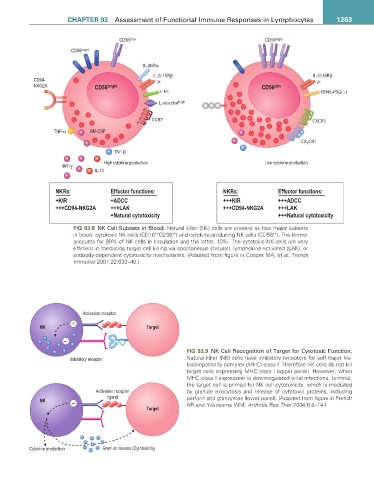
                         FIG 93.8  NK Cell Subsets in Blood. Natural killer (NK) cells are present as two major subsets
                                                         +/-
                                                    ++
                         in blood: cytotoxic NK cells (CD16 CD56 ) and cytokine-producing NK cells (CD56 ). The former
                                                                                          ++
                         accounts for 90% of NK cells in circulation and the latter, 10%. The cytotoxic NK cells are very
                         efficient in mediating target cell killing via spontaneous (natural), lymphokine-activated (LAK), or
                         antibody-dependent cytotoxicity mechanisms. (Adapted from figure in Cooper MA, et al. Trends
                         Immunol 2001;22:633–40.)


                            Activation receptor
                         +
              NK                                 Target

                      −
                                                              FIG 93.9  NK Cell Recognition of Target for Cytotoxic Function.
                        Inhibitory receptor                   Natural killer (NK) cells have inhibitory receptors for self-major his-
                                                              tocompatibility complex (MHC) class I. Therefore NK cells do not kill
                                                              target cells expressing MHC class I (upper panel). However, when
                                                              MHC class I expression is downregulated (viral infections, tumors),
                                                              the target cell is primed for NK cell cytotoxicity, which is mediated
                                Activation receptor           by granule exocytosis and release of cytotoxic proteins, including
                                    ligand                    perforin and granzymes (lower panel). (Adapted from figure in French
              NK         +
                                                 Target       AR and Yokoyama WM. Arthritis Res Ther 2004;6:8–14.)


           Cytokine production     Granule release (Cytotoxicity)

