


Page 1402 - Hall et al (2015) Principles of Critical Care-McGraw-Hill
P. 1402
CHAPTER 101: Hyperglycemic Crisis and Hypoglycemia   975


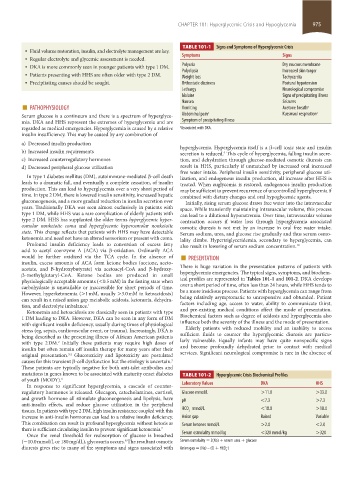
                                                                            TABLE 101-1    Signs and Symptoms of Hyperglycemic Crisis
                       • Fluid volume restoration, insulin, and electrolyte management are key.
                                                                          Symptoms                           Signs
                        • Regular electrolyte and glycemic assessment is needed.
                        • DKA is more commonly seen in younger patients with type 1 DM.  Polyuria            Dry mucous membrane
                                                                          Polydipsia                         Increased skin turgor
                        • Patients presenting with HHS are often older with type 2 DM.  Weight loss          Tachycardia
                        • Precipitating causes should be sought.          Orthostatic dizziness              Postural hypotension
                                                                          Lethargy                           Neurological compromise
                                                                          Malaise                            Signs of precipitating illness
                        ■  PATHOPHYSIOLOGY                                Nausea                             Seizures  a
                                                                          Vomiting
                                                                                                             Acetone breath
                    Serum glucose is a continuum and there is a spectrum of hyperglyce-  Abdominal pain a    Kussmaul respiration a
                    mia. DKA and HHS represent the extremes of hyperglycemia and are   Symptom of precipitating illness
                    regarded as medical emergencies. Hyperglycemia is caused by a relative   a Associated with DKA.
                    insulin insufficiency. This may be caused by any combination of
                    a)  Decreased insulin production
                    b) Increased insulin requirements                     hyperglycemia. Hyperglycemia itself is a β-cell toxic state and insulin
                                                                          secretion is reduced.  This cycle of hyperglycemia, falling insulin secre-
                                                                                        9
                    c)  Increased counterregulatory hormones              tion, and dehydration through glucose-mediated osmotic diuresis can
                    d) Decreased peripheral glucose utilization           result in HHS, particularly if unmatched by increased oral increased
                                                                          free water intake. Peripheral insulin sensitivity, peripheral glucose uti-
                     In type 1 diabetes mellitus (DM), autoimmune-mediated β-cell death   lization, and endogenous insulin production, all increase after HHS is
                    leads to a dramatic fall, and eventually a complete cessation, of insulin   treated. When euglycemia is restored, endogenous insulin production
                    production. This can lead to hyperglycemia over a very short period of   may be sufficient to prevent recurrence of uncontrolled hyperglycemia if
                    time. In type 2 DM, there is lowered insulin sensitivity, increased hepatic   combined with dietary changes and oral hypoglycemic agents.
                    gluconeogenesis, and a more gradual reduction in insulin secretion over   Initially, rising serum glucose draws free water into the intravascular
                    years. Traditionally DKA was seen almost exclusively in patients with   space. While transiently maintaining intravascular volume, this process
                    type 1 DM, while HHS was a rare complication of elderly patients with   can lead to a dilutional hyponatremia. Over time, intravascular volume
                    type 2 DM. HHS has supplanted the older terms hyperglycemic hyper-  contraction occurs if water loss through hyperglycemia associated
                    osmolar nonketotic coma and  hyperglycemic hyperosmolar nonketotic   osmotic diuresis is not met by an increase in oral free water intake.
                    state. This change reflects that patients with HHS may have detectable   Serum sodium, urea, and glucose rise gradually and thus serum osmo-
                      ketonemia and need not have an altered sensorium or present with coma.  lality climbs. Hypertriglyceridemia, secondary to hyperglycemia, can
                     Profound insulin deficiency leads to conversion of excess fatty   also result in lowering of serum sodium concentration. 10
                    acid  to acetyl coenzyme A  (ACA)  via  β-oxidation. Ordinarily ACA
                    would be further oxidized via the TCA cycle. In the absence of     ■  PRESENTATION
                    insulin, excess amounts of ACA form ketone bodies (acetone, aceto-
                    acetate,  and  B-hydroxybutyrate)  via  acetoacyl-CoA  and  β-hydroxy-  There is huge variation in the presentation patterns of patients with
                    β-methylglutaryl-CoA. Ketone bodies are produced in small   hyperglycemia emergencies. The typical signs, symptoms, and biochem-
                    physiologically acceptable amounts (<0.5 mM) in the fasting state when   ical profiles are represented in Tables 101-1 and 101-2. DKA develops
                    carbohydrate is unavailable or inaccessible for short periods of time.   over a short period of time, often less than 24 hours, while HHS tends to
                    However, hyperketonemia (>1 mM, usually >3.0 mM in ketoacidosis)   be a more insidious process. Patients with hyperglycemia can range from
                    can result in a raised anion gap metabolic acidosis, ketonuria, dehydra-  being relatively asymptomatic to unresponsive and obtunded. Patient
                    tion, and electrolyte imbalance. 1                    factors including  age, access to  water, ability to  communicate thirst,
                     Ketonemia and ketoacidosis are classically seen in patients with type   and pre-existing medical conditions affect the mode of presentation.
                    1 DM leading to DKA. However, DKA can be seen in any form of DM   Biochemical factors such as degree of acidosis and hyperglycemia also
                    with significant insulin deficiency, usually during times of physiological   influence both the severity of the illness and the mode of presentation.
                    stress (eg, sepsis, cardiovascular event, or trauma). Increasingly, DKA is   Elderly  patients  with  reduced  mobility  and  an  inability  to  access
                    being described as the presenting illness of African American patients   sufficient fluids to counter the hyperglycemic diuresis are particu-
                    with type 2 DM.  Initially these patients may require high doses of   larly vulnerable. Equally infants may have quite nonspecific signs
                                2
                      insulin but often remain off insulin therapy for many years after their   and become profoundly dehydrated prior to contact with medical
                    original presentation.  Glucotoxicity and lipotoxicity are postulated   services. Significant neurological compromise is rare in the absence of
                                   3,4
                    causes for this transient β-cell dysfunction but the etiology is uncertain.
                                                                       5
                    These patients are typically negative for both anti-islet antibodies and
                    mutations in genes known to be associated with maturity onset diabetes     TABLE 101-2    Hyperglycemic Crisis Biochemical Profiles
                    of youth (MODY). 6
                     In response to significant hyperglycemia, a cascade of counter-  Laboratory Values  DKA            HHS
                    regulatory hormones is released. Glucagon, catecholamines, cortisol,    Glucose mmol/L  >11.0       >33.0
                    and growth hormone all stimulate gluconeogenesis and lipolysis, have   pH        <7.3               >7.3
                      anti-insulin effects, and reduce glucose utilization in the peripheral
                                                                            −
                    tissues. In patients with type 2 DM, high insulin resistance coupled with this   HCO  mmol/L  <18.0  >18.0
                                                                             3
                    increase in anti-insulin hormones can lead to a relative insulin deficiency.   Anion gap  Raised    Variable
                    This combination can result in profound hyperglycemia without ketosis as   Serum ketones mmol/L  >2.0  <2.0
                    there is sufficient circulating insulin to prevent significant ketonemia. 7
                     Once the renal threshold for reabsorption of glucose is breached   Serum osmolality mmol/kg  <320 mmol/kg  >320
                    (∼10.0 mmol/L or 180 mg/dL), glycosuria occurs.  The resultant osmotic   Serum osmolality = 2(Na) + serum urea + glucose
                                                       8
                    diuresis gives rise to many of the symptoms and signs associated with   Anion gap = (Na) – (Cl + HCO )
                                                                                         −
                                                                                         3


            section08.indd   975                                                                                       1/14/2015   8:28:28 AM

