


Page 1578 - Hall et al (2015) Principles of Critical Care-McGraw-Hill
P. 1578
CHAPTER 115: The Transplant Patient  1097


                    LIVER TRANSPLANTATION                                 and encephalopathy. While previously the Child-Turcotte-Pugh (CTP)
                        ■  INTRODUCTION                                   scoring system lead to the creation of a more outcome validated score
                                                                          score guided indications for transplantation, shortcomings with the

                    As we enter the sixth decade of liver transplantation, the procedure   in 2002. The Model of End-Stage Liver Disease (MELD) score was
                                                                          created by the United Network for Organ Sharing (UNOS) for liver
                    that was once considered an experimental technique fraught with   transplant organ allocation. The MELD score takes into account sur-
                    complications has evolved into a routine therapeutic option offered   rogates of  synthetic  dysfunction in an  attempt  to prioritize patients
                    to many patients with end-stage liver disease or acute liver failure.   based on their disease severity. The MELD score is based on objective
                    The advancements in liver transplantation since it was first attempted   lab values of total bilirubin, creatinine, and international normalized
                    in 1963 in Colorado have facilitated prolongation as well as enhanced   ratio (INR) to risk stratify patients with cirrhosis complicated by por-
                    quality of life where medical management was previously limited.   tal hypertension and synthetic function decline. The MELD score has
                    Given the advancements and success in the field, the number of   been prospectively validated in several populations and is currently the
                    patients eligible for transplantation has outstripped the supply of   scoring system of choice for prioritization of candidates with chronic
                    suitable livers for donation. This gap has led to other strategies to   liver failure.
                    increase the donor pool. Living-related partial liver grafts, the use of   MELD Score: 9.57 × log [Creatinine (mg/dL)] + 3.78 × log [bilirubin
                    extended criteria donors, transplantation of hepatitis C virus livers to   (mg/dL)] + 11.2 × log (INR) + 6.43
                    hepatitis C recipients, and the advent of hepatitis B immunoglobulin   Three-month survival is 95% with a MELD score of <15, whereas it
                    have allowed for transplantation where none would have previously   is less than 20% in any patient with a MELD score of >40. The MELD
                    existed.                                              system has led to a 12% reduction in wait list times as it identifies
                        ■  INDICATIONS AND OUTCOMES                       patients (those with the lowest MELD scores) who are not benefited by
                                                                          transplantation.  Implementation of this new system has also decreased
                                                                                     65
                    Indications:  End-stage cirrhosis complicated by portal hypertension or   pretransplant mortality without having a negative impact on post-
                                                                                         66
                    compromised hepatic synthetic function is the most common indica-  transplant mortality.  Currently studies are underway looking at the
                    tion for liver transplantation accounting for over 80% of transplants   addition of serum sodium to the MELD score as hyponatremia reflects
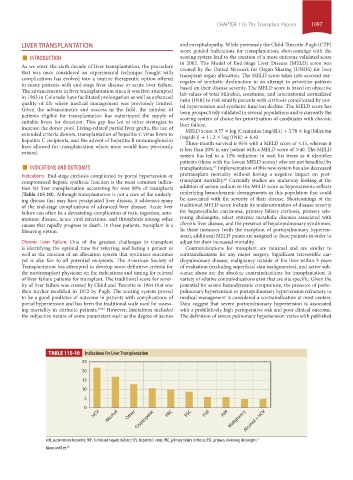
                    (Table 115-10). Although transplantation is not a cure of the underly-  underlying hemodynamic derangements in this population that could
                    ing disease that may have precipitated liver disease, it addresses many   be  associated  with  the  severity  of  their  disease.  Shortcomings  of  the
                    of the end-stage complications of advanced liver disease. Acute liver     traditional MELD score include its underestimation of disease severity
                    failure can often be a devastating complication of toxic ingestion, auto-  for hepatocellular carcinoma, primary  biliary cirrhosis, primary scle-
                    immune disease, acute viral infections, and thrombosis among other   rosing cholangitis, select systemic metabolic diseases associated with
                    causes that rapidly progress to death. In these patients, transplant is a   chronic liver disease, and the presence of hepatopulmonary syndromes.
                    lifesaving option.                                    In these instances (with the exception of portopulmonary hyperten-
                                                                          sion), additional MELD points are assigned to these patients in order to
                    Chronic  Liver Failure:  One  of  the  greatest  challenges  in  transplant   adjust for their increased mortality.
                    is  identifying  the  optimal  time  for  referring  and  listing  a  patient  as   Contraindications  for  transplant  are  minimal  and  are  similar  to
                    well as the creation of an allocation system that optimizes outcomes   contraindications for  any  major surgery. Significant irreversible car-
                    yet is also fair to all potential recipients. The American Society of   diopulmonary disease, malignancy outside of the liver within 5 years
                    Transplantation has attempted to develop more definitive criteria for   of evaluation (excluding superficial skin malignancies), and active sub-
                    the nontransplant physician on the indications and timing for referral   stance abuse are the absolute contraindications for transplantation. A
                    of liver failure patients for transplant. The traditional score for sever-  variety of relative contraindications exist that are site specific. Given the
                    ity of liver failure was created by Child and Turcotte in 1964 that was   potential for severe hemodynamic compromise, the presence of porto-
                    then further modified in 1972 by Pugh. The scoring system proved   pulmonary hypertension or portopulmonary hypertension refractory to
                    to be a good predictor of outcome in patients with complications of   medical management is considered a contraindication at most centers.
                    portal hypertension and has been the traditional scale used for assess-  Data suggest that severe portopulmonary hypertension is associated
                    ing mortality in cirrhotic patients. 63,64  However, limitations included   with a prohibitively high perioperative risk and poor clinical outcome.
                    the subjective nature of some parameters such as the degree of ascites   The definition of severe pulmonary hypertension varies with published


                              TABLE 115-10    indications for Liver Transplantation
                                        25
                                        20
                                        15
                                        10
                                         5
                                         0
                                            HCV  Alcohol  Other  Cryptogenic  PBC  PSC  FHF  AIH  Malignancy Alcohol + HCV


                            AIH, autoimmune hepatitis; FHF, fulminant hepatic failure; HCV, hepatitis C virus; PBC, primary biliary cirrhosis; PSC, primary sclerosing cholangitis. 7
                            Moon and Lee. 68


            section10.indd   1097                                                                                      1/20/2015   9:19:56 AM

