


Page 1818 - Hall et al (2015) Principles of Critical Care-McGraw-Hill
P. 1818
CHAPTER 129: Dermatologic Conditions  1287


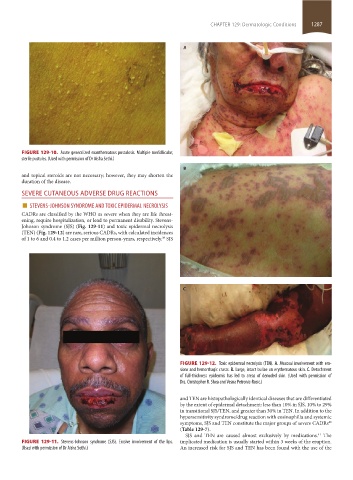
                    FIGURE 129-10.  Acute generalized exanthematous pustulosis. Multiple nonfollicular,
                    sterile pustules. (Used with permission of Dr Aisha Sethi.)

                    and topical steroids are not necessary; however, they may shorten the
                    duration of the disease.

                    SEVERE CUTANEOUS ADVERSE DRUG REACTIONS
                        ■  STEVENS-JOHNSON SYNDROME AND TOXIC EPIDERMAL NECROLYSIS

                    CADRs are classified by the WHO as severe when they are life threat-
                    ening, require hospitalization, or lead to permanent disability. Stevens-
                    Johnson syndrome (SJS) (Fig. 129-11) and toxic epidermal necrolysis
                    (TEN) (Fig. 129-12) are rare, serious CADRs, with calculated incidences
                    of 1 to 6 and 0.4 to 1.2 cases per million person-years, respectively.  SJS
                                                                   39


                                                                          FIGURE 129-12.  Toxic epidermal necrolysis (TEN). A. Mucosal involvement with ero-
                                                                          sions and hemorrhagic crusts. B. Large, intact bullae on erythematous skin. C. Detachment
                                                                          of full-thickness epidermis has led to areas of denuded  skin. (Used with permission of
                                                                          Drs. Christopher R. Shea and Vesna Petronic-Rosic.)


                                                                          and TEN are histopathologically identical diseases that are differentiated
                                                                          by the extent of epidermal detachment: less than 10% in SJS, 10% to 29%
                                                                          in transitional SJS/TEN, and greater than 30% in TEN. In addition to the
                                                                          hypersensitivity syndrome/drug reaction with eosinophilia and systemic
                                                                          symptoms, SJS and TEN constitute the major groups of severe CADRs
                                                                                                                            40
                                                                          (Table 129-7).
                                                                           SJS and TEN are caused almost exclusively by medications.  The
                                                                                                                         41
                    FIGURE 129-11.  Stevens-Johnson syndrome (SJS). Erosive involvement of the lips.   implicated medication is usually started within 3 weeks of the eruption.
                    (Used with permission of Dr Aisha Sethi.)             An increased risk for SJS and TEN has been found with the use of the


            section11.indd   1287                                                                                      1/19/2015   10:53:21 AM

