


Page 1820 - Hall et al (2015) Principles of Critical Care-McGraw-Hill
P. 1820
CHAPTER 129: Dermatologic Conditions  1289


                                                                          acetate, and ophthalmic sodium sulfacetamide) because of potential
                      TABLE 129-10    Clinical and Histopathological Features of SJS/TEN
                                                                          significant absorption and the possibility of inducing SJS.  A variety of
                                                                                                                   54
                    Laboratory Findings (% patients) Histopathology  Immunofluorescence  other dressings may be used to decrease fluid loss and pain and promote
                                                                                                             55
                    •  Anemia (100%)    •  Subepidermal vesiculation  Negative  wound healing. These include porcine xenografts  and synthetic dress-
                    •  Lymphopenia (90%)  •  Necrotic keratinocytes at all   ings such as Omniderm, OpSite, Vigilon, Mepitel, and Biobrane.
                    •  Neutropenia  (30%)  levels of the epidermis in SJS  The use of corticosteroids and immunosuppressive agents in the
                            a
                    •  Thrombocytopenia b  •  Full-thickness necrosis in TEN  treatment of TEN is controversial. The rationale for such an approach is
                    •  Eosinophilia     •  Minimal inflammatory           based on the assumption that TEN is an immune-mediated event. There
                    •  Hypoalbuminemia   infiltrate in the dermis         are  no  case-controlled  studies  supporting  the  use  of  corticosteroids;
                    •  Hypocalcemia                                       however, several case reports have advocated their use. 56,57  In most cases
                    •  Proteinuria, <1 g/day (50%)                        in which steroids were found effective, they were started very early in
                    •  Elevated transaminases (30%)                       the course of the disease. More recent literature has indicated a higher
                    •  Elevated amylase, lipase                           mortality rate, increased time to recovery, and increased length of hos-
                                                                          pital stay in patients treated with systemic corticosteroids. 58,59  Patients
                    a Carries poor prognosis.
                                                                          undergoing long-term glucocorticoid therapy who develop TEN may
                    b Rare.                                               have a delay in onset, but the severity of disease is unaffected.  Based
                                                                                                                       60
                                                                          on this information, corticosteroids should not be used routinely in
                    pemphigus vulgaris (Table 129-11). In all these cases, full-thickness epi-  TEN and should only be considered in patients who present early in the
                    dermal necrosis is rare (except in GVHD, in which epidermal necrosis is   course of disease. Intravenous immunoglobulin therapy (IVIG) in TEN
                    accompanied by an abundant lymphocytic infiltrate).   aims to decrease Fas-mediated keratinocyte apoptosis by sequestering
                     Erythema multiforme (Fig. 129-13) (previously referred to as erythema    Fas available for binding to CD95. Several nonrandomized, uncontrolled
                    multiforme minor) is an acute, self-limited reaction characterized by   studies have shown that large-dose IVIG decreases mortality rate and
                    asymptomatic, annular erythematous, or urticarial plaques with central   progression of TEN, 61-64  whereas at least one prospective study showed
                    areas of blistering and necrosis, resulting in the characteristic target   no benefit.  Currently, there is no consensus about the use of IVIG due
                                                                                 40
                    lesions. Lesions usually develop on the extensor surfaces of the extremi-  to lack of controlled, randomized trials. In addition, the use of plasma-
                    ties and mucosae, and cover less than 10% of the body surface area.   pheresis and immunosuppressive drugs remains controversial due to the
                    Outbreaks last for 1 to 4 weeks. Relapses are frequent. It is associated   lack of strong clinical data.
                    with recurrent herpes simplex virus infections in the great majority of
                     Treatment for SJS and TEN includes pain management and prompt   ■
                    cases and with M pneumoniae infection in a smaller subset.  HYPERSENSITIVITY SYNDROME/DRUG REACTION WITH EOSINOPHILIA
                    withdrawal of any agents that are not essential for the maintenance of   AND SYSTEMIC SYMPTOMS
                    life (Table 129-12). The latter has been shown to decrease mortality rate   A severe hypersensitivity syndrome consisting of fever, skin rash,
                    in TEN by about 30% per day, despite some progression of the muco-  lymphadenopathy, and variable organ (usually liver) involvement may
                    cutaneous involvement.  Fluid resuscitation, treatment of infections,   appear 1 to 8 weeks after administration of the inciting drug for the first
                                     42
                    and meticulous skin and eye care are most appropriately managed in an   time. When associated with eosinophilia and systemic symptoms, the
                    isolation room in a burn unit, where the staff is trained in topical wound   term  drug  reaction  with  eosinophilia  and  systemic  symptoms  (DRESS)
                    and skin care. Topical therapy includes gentle debridement of necrotic   is used. Table 129-13 includes the most recently proposed diagnostic
                    skin followed by the application of nonadherent dressings to the areas   criteria for DRESS.  Typical precipitating drugs are aromatic anticon-
                                                                                        65
                    of skin erosion, a wrapping of a thin silver-impregnated dressing, and   vulsants (eg, phenytoin, phenobarbital, and carbamazepine) and sulfon-
                    an outer linen covering to hold all in place. Antibiotic ointments are   amides. DRESS syndrome is estimated to occur in between 1 in 1000
                    widely used, although their value is unproven. It is important to avoid   and 1 in 10,000 exposures with these drugs. There is a 75% incidence
                    the sulfonamide derivatives (silver sulfadiazine cream, topical mafenide   of cross-reactivity between the different anticonvulsants; therefore,


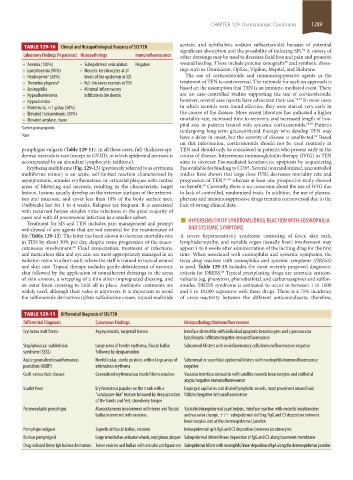
                      TABLE 129-11    Differential Diagnosis of SJS/TEN
                    Differential Diagnosis   Cutaneous Findings            Histopathology/Immunofluorescence
                    Erythema multiforme      Asymptomatic, targetoid lesions  Interface dermatitis with individual apoptotic keratinocytes and a perivascular
                                                                             lymphocytic infiltrate/negative immunofluorescence
                    Staphylococcal scalded skin   Large areas of tender erythema, flaccid bullae   Subcorneal blisters with no inflammatory cells/immunofluorescence negative
                      syndrome (SSSS)          followed by desquamation
                    Acute generalized exanthematous   Nonfollicular, sterile pustules within large areas of   Subcorneal or superficial epidermal blisters with neutrophils/immunofluorescence
                      pustulosis (AGEP)      edematous erythema              negative
                    Graft-versus-host disease  Generalized erythematous morbilliform eruption  Vacuolar interface dermatitis with satellite necrotic keratinocytes and epithelial
                                                                           atypia/negative immunofluorescence
                    Scarlet fever            Erythematous papules on the trunk with a   Engorged capillaries and dilated lymphatic vessels, most prominent around hair
                                             “ sandpaper-like” texture followed by desquamation  follicles/negative immunofluorescence
                                             of the hands and feet, strawberry tongue
                    Paraneoplastic pemphigus  Mucocutaneous involvement with tense and flaccid  Variable intraepidermal acantholysis, interface reaction with necrotic keratinocytes
                                             bullae intermixed with erosions.  and vacuolar change, +/− subepidermal clefting/ IgG and C3 deposition between
                                                                             keratinocytes and at the dermoepidermal junction
                    Pemphigus vulgaris       Superficial flaccid bullae, erosions  Intraepidermal split/IgG and C3 deposition between keratinocytes
                    Bullous pemphigoid       Large tense bullae, urticarial wheals, serpiginous plaques Subepidermal blister/linear deposition of IgG and C3 along basement membrane
                    Drug-induced linear IgA bullous dermatosis Tense vesicles and bullae with annular configuration Subepidermal blister with neutrophils/linear deposition of IgA along the dermoepidermal junction


            section11.indd   1289                                                                                      1/19/2015   10:53:22 AM

