


Page 1821 - Hall et al (2015) Principles of Critical Care-McGraw-Hill
P. 1821
1290     PART 11: Special Problems in Critical Care


                                                                         TABLE 129-14    Drugs Associated With DRESS
                                                                        Anticonvulsants                    Antiretroviral
                                                                        •  Phenobarbital                   •  Abacavir
                                                                        •  Phenylhydantoin                 •  Nevirapine
                                                                        •  Carbamazepine                   Anti-TB drugs
                                                                        •  Phenytoin                       •  Isoniazid
                                                                        •  Lamotrigine                     •  Ethambutol
                                                                        •  Olanzapine                      Calcium channel blockers
                                                                        Methyldopa                         •  Diltiazem
                                                                        Antibiotics                        ACE inhibitors
                                                                        •  Sulfonamides                    •  Captopril
                                                                        •  Dapsone                         Allopurinol
                                                                        •  Minocycline
                                                                        •  Rifampin                        NSAIDS
                                                                        •  Azithro/clarithromycin
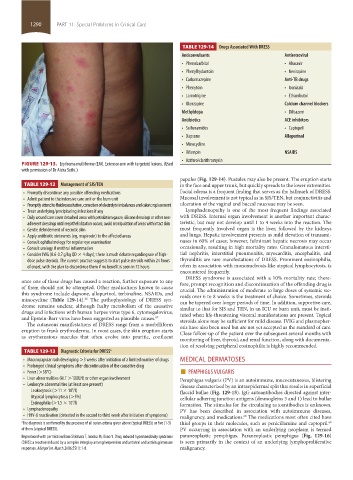
                 FIGURE 129-13.  Erythema multiforme (EM). Extensor arm with targetoid lesions. (Used
                 with permission of Dr Aisha Sethi.)
                                                                       papules (Fig. 129-14). Pustules may also be present. The eruption starts
                   TABLE 129-12    Management of SJS/TEN               in the face and upper trunk, but quickly spreads to the lower extremities.
                  •  Promptly discontinue any possible offending medications  Facial edema is a frequent finding that serves as the hallmark of DRESS.
                  •  Admit patient to the intensive care unit or the burn unit  Mucosal involvement is not typical as in SJS/TEN, but conjunctivitis and
                  •  Promptly attend to fluid resuscitation, correction of electrolyte imbalances and caloric replacement  ulceration of the vaginal and buccal mucosae may be seen.
                  •  Treat underlying/precipitating infections if any    Lymphadenopathy is one of the most frequent findings associated
                  •  Daily wound care: cover detached areas with petrolatum gauze, silicone dressings or other non-  with DRESS. Internal organ involvement is another important charac-
                   adherent dressings until reepithelialization occurs; avoid manipulation of areas with intact skin  teristic, but may not develop until 1 to 4 weeks into the reaction. The
                  •  Gentle debridement of necrotic skin               most frequently involved organ is the liver, followed by the kidneys
                  •  Apply antibiotic ointments (eg, mupirocin) to the affected areas  and lungs. Hepatic involvement presents as mild elevation of transami-
                  •  Consult ophthalmology for regular eye examination  nases in 60% of cases; however, fulminant hepatic necrosis may occur
                  •  Consult urology if urethral inflammation          occasionally, resulting in high mortality rates. Granulomatous intersti-
                  •  Consider IVIG (0.6-0.7 g/kg QD × 4 days); there is much debate regarding use of high-  tial  nephritis,  interstitial  pneumonitis, myocarditis,  encephalitis,  and
                   dose pulse steroids. The current practice suggests to start pulse steroids within 24 hours   thyroiditis are rare manifestations of DRESS. Prominent eosinophilia,
                   of onset, with the plan to discontinue them if no benefit is seen in 72 hours  often in association with mononucleosis-like atypical lymphocytosis, is
                                                                       encountered frequently.
                                                                         DRESS syndrome is associated with a 10% mortality rate; there-
                 once one of these drugs has caused a reaction, further exposure to any   fore, prompt recognition and discontinuation of the offending drug is
                 of them should not be attempted. Other medications known to cause   crucial. The administration of moderate to large doses of systemic ste-
                 this syndrome include dapsone, allopurinol, terbinafine, NSAIDs, and   roids over 6 to 8 weeks is the treatment of choice. Sometimes, steroids
                 minocycline (Table 129-14).  The pathophysiology of DRESS syn-  can be tapered over longer periods of time. In addition, supportive care,
                                       66
                 drome remains unclear, although faulty metabolism of the causative   similar to that for SJS and TEN, in an ICU or burn unit, must be insti-
                 drugs and infections with human herpes virus type 6, cytomegalovirus,   tuted when life-threatening visceral manifestations are present. Topical
                 and Epstein-Barr virus have been suggested as plausible causes. 67  steroids alone may be sufficient for mild disease. IVIG and plasmapher-
                   The cutaneous manifestations of DRESS range from a morbilliform   esis have also been used but are not yet accepted as the standard of care.
                 eruption to frank erythroderma. In most cases, the skin eruption starts   Close follow-up of the patient over the subsequent several months with
                 as erythematous macules that often evolve into pruritic, confluent   monitoring of liver, thyroid, and renal function, along with documenta-
                                                                       tion of resolving peripheral eosinophilia is highly recommended.
                   TABLE 129-13    Diagnostic Criteria for DRESS a
                  •  Maculopapular rash developing >3 weeks after initiation of a limited number of drugs  MEDICAL DERMATOSES
                  •  Prolonged clinical symptoms after discontinuation of the causative drug    ■
                  •  Fever (>38°C)                                        PEMPHIGUS VULGARIS
                  •  Liver abnormalities (ALT >100U/I) or other organ involvement  Pemphigus vulgaris (PV) is an autoimmune, mucocutaneous, blistering
                  •  Leukocyte abnormalities (at least one present)    disease characterized by an intraepidermal split that results in superficial
                    Leukocytosis (>11 × 10 /I)                         flaccid bullae (Fig. 129-15). IgG autoantibodies directed against inter-
                                  9
                    Atypical lymphocytosis (>5%)                       cellular adhering junction antigens (desmogleins 3 and 1) lead to bullae
                                  9
                    Eosinophilia (>1.5 × 10 /I)                        formation. The stimulus for the circulating autoantibodies is unknown.
                  •  Lymphadenopathy                                   PV has been described in association with autoimmune diseases,
                  •  HHV-6 reactivation (detected in the second to third week after initiation of symptoms)  malignancy, and medications.  The medications most often cited have
                                                                                             68
                 a The diagnosis is confirmed by the presence of all seven criteria given above (typical DRESS) or five (1-5)   thiol groups in their molecules, such as penicillamine and captopril.
                                                                                                                          69
                 of them (atypical DRESS).                             PV occurring in association with an underlying neoplasm is termed
                 Reproduced with permission from Shiohara T, Inaoka M, Kano Y. Drug induced hypersensitivity  syndrome   paraneoplastic pemphigus.  Paraneoplastic pemphigus (Fig.  129-16)
                 (DIHS): a reaction induced by a complex interplay among herpesvirus and antiviral and antidrug immune   is seen primarily in the context of an underlying lymphoproliferative
                 responses. Allergol Int. March 2006;55(1):1-8.        malignancy.


            section11.indd   1290                                                                                      1/19/2015   10:53:27 AM

