


Page 1826 - Hall et al (2015) Principles of Critical Care-McGraw-Hill
P. 1826
CHAPTER 129: Dermatologic Conditions  1295


                                                            Palpable purpura


                                       No systemic involvement            With systemic involvement
                                     (primary cutaneous vasculitis)          (systemic vasculitis)


                                    I. Leukocytoclastic vasculitis  *GI involvement          Fever
                                          1. Idiopathic               (bloody stools)
                                          2. Drug-induced           *Renal involvement
                                             (NSAIDs, penicillin, quinolones,    (hematuria)  * Rule out underlying
                                             minocycline, hydralazine, anti-  *Arthritis  infection vs malignancy
                                             TNF-  agents)          * +/– asthma
                                                                                       -> Bacterial/viral/fungal
                                                                                            cultures
                                                                        Cryo +         -> Hep B/C, CMV, HIV,
                                                                        ANCA –              parvovirus B19
                                                                                       -> Echo if heart murmur
                                                                                Cryo –
                                                                ANCA +
                                                                                ANCA –
                                        I. Wegener granulomatosis  I. Cryoglobulinemic  I. Rheumatoid vasculitis
                                           (c-ANCA)              vasculitis             II. Sjögren disease
                                        II. Churg-Strauss (p-ANCA)  -> Rule out underlying  III. Systemic lupus
                                        III. Microscopic polyangiitis       multiple myeloma, other  IV. Urticarial vasculitis
                                                                      lymphoproliferative  V. Henoch-Schönlein purpura
                                                                      disorders
                                                                 -> HCV, HBV, HIV

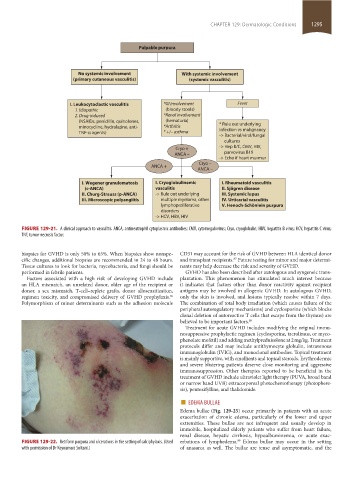
                    FIGURE 129-21.  A clinical approach to vasculitis. ANCA, antineutrophil cytoplasmic antibodies; CMV, cytomegalovirus; Cryo, cryoglobulin; HBV, hepatitis B virus; HCV, hepatitis C virus;
                    TNF, tumor necrosis factor.


                    biopsies for GVHD is only 50% to 65%. When biopsies show nonspe-  CD31 may account for the risk of GVHD between HLA identical donor
                    cific changes, additional biopsies are recommended in 24 to 48 hours.   and transplant recipients.  Future testing for minor and major determi-
                                                                                            87
                    Tissue cultures to look for bacteria, mycobacteria, and fungi should be   nants may help decrease the risk and severity of GVHD.
                    performed in febrile patients.                         GVHD has also been described after autologous and syngeneic trans-
                     Factors associated with a high risk of developing GVHD include   plantation. This phenomenon has stimulated much interest because
                    an  HLA mismatch,  an  unrelated donor,  older  age of the  recipient or   it indicates that factors other than donor reactivity against recipient
                    donor, a sex  mismatch,  T-cell–replete grafts,  donor allosensitization,   antigens may be involved in allogenic GVHD. In autologous GVHD,
                    regimen toxicity, and compromised delivery of GVHD prophylaxis.    only  the  skin is  involved,  and  lesions  typically  resolve  within  7  days.
                                                                      86
                    Polymorphism of minor determinants such as the adhesion molecule   The combination of total body irradiation (which causes failure of the
                                                                          peripheral autoregulatory mechanisms) and cyclosporine (which blocks
                                                                          clonal deletion of autoreactive T cells that escape from the thymus) are
                                                                          believed to be important factors. 88
                                                                           Treatment for acute GVHD includes modifying the original immu-
                                                                          nosuppressive prophylactic regimen (cyclosporine, tacrolimus, or myco-
                                                                          phenolate mofetil) and adding methylprednisolone at 2 mg/kg. Treatment
                                                                          protocols differ and may include antithymocyte globulin, intravenous
                                                                          immunoglobulin (IVIG), and monoclonal antibodies. Topical treatment
                                                                          is mainly supportive, with emollients and topical steroids. Erythrodermic
                                                                          and severe blistering patients deserve close monitoring and aggressive
                                                                          immunosuppression. Other therapies reported to be beneficial in the
                                                                          treatment of GVHD include ultraviolet light therapy (PUVA, broad band
                                                                          or narrow band UVB) extracorporeal photochemotherapy (photophere-
                                                                          sis), pentoxifylline, and thalidomide.
                                                                              ■  EDEMA BULLAE

                                                                          Edema bullae (Fig. 129-25) occur primarily in patients with an acute
                                                                          exacerbation of chronic edema, particularly of the lower and upper
                                                                          extremities. These bullae are not infrequent and usually develop in
                                                                          immobile,  hospitalized  elderly patients  who  suffer  from heart  failure,
                                                                          renal disease, hepatic cirrhosis, hypoalbuminemia, or acute exac-
                                                                                             89
                    FIGURE 129-22.  Retiform purpura and ulcerations in the setting of calciphylaxis. (Used   erbations of lymphedema.  Edema bullae may occur in the setting
                    with permission of Dr Keyoumars Soltani.)             of anasarca as well. The bullae are tense and asymptomatic, and the


            section11.indd   1295                                                                                      1/19/2015   10:54:23 AM

