


Page 116 - Textbook of Pathology, 6th Edition
P. 116
100


     SECTION I


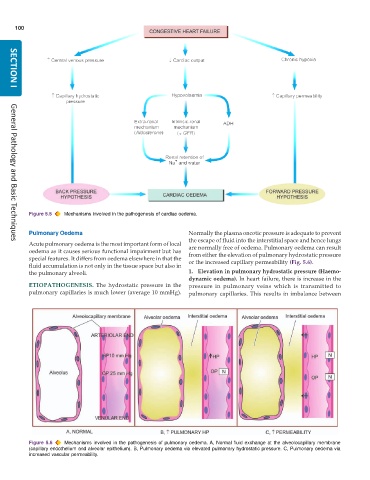
           Figure 5.5  Mechanisms involved in the pathogenesis of cardiac oedema.

           Pulmonary Oedema                                    Normally the plasma oncotic pressure is adequate to prevent
                                                               the escape of fluid into the interstitial space and hence lungs
           Acute pulmonary oedema is the most important form of local  are normally free of oedema. Pulmonary oedema can result
     General Pathology and Basic Techniques
           oedema as it causes serious functional impairment but has  from either the elevation of pulmonary hydrostatic pressure
           special features. It differs from oedema elsewhere in that the  or the increased capillary permeability (Fig. 5.6).
           fluid accumulation is not only in the tissue space but also in
           the pulmonary alveoli.                              1. Elevation in pulmonary hydrostatic pressure (Haemo-
                                                               dynamic oedema). In heart failure, there is increase in the
           ETIOPATHOGENESIS.  The hydrostatic pressure in the  pressure in pulmonary veins which is transmitted to
           pulmonary capillaries is much lower (average 10 mmHg).  pulmonary capillaries. This results in imbalance between


           Figure 5.6  Mechanisms involved in the pathogenesis of pulmonary oedema. A, Normal fluid exchange at the alveolocapillary membrane
           (capillary endothelium and alveolar epithelium). B, Pulmonary oedema via elevated pulmonary hydrostatic pressure. C, Pulmonary oedema via
           increased vascular permeability.

