


Page 125 - Textbook of Pathology, 6th Edition
P. 125
clammy limbs, weak and rapid pulse, and low blood actual reduction of blood volume (normovolaemia) results 109
pressure. Another type of shock which is not due to in cardiogenic shock.
circulatory derangement is anaphylactic shock from type 1 3. Septic (Toxaemic) shock. Severe bacterial infections or
immunologic reaction (page 73). septicaemia induce septic shock. It may be the result of Gram-
In routine clinical practice, however, true shock is the
form which occurs due to haemodynamic derangements with negative septicaemia (endotoxic shock) which is more
common, or Gram-positive septicaemia (exotoxic shock).
hypoperfusion of the cells; this is the type which is commonly CHAPTER 5
referred to as ‘shock’ if not specified. 4. Other types. These include following types:
i) Traumatic shock. Shock resulting from trauma is initially
Classification and Etiology due to hypovolaemia, but even after haemorrhage has been
controlled, these patients continue to suffer loss of plasma
Although in a given clinical case, two or more factors may
be involved in causation of true shock, a simple etiologic volume into the interstitium of injured tissue and hence is
classification of shock syndrome divides it into following 3 considered separately in some descriptions.
major types and a few other variants (Table 5.4): ii) Neurogenic shock. Neurogenic shock results from causes of
interruption of sympathetic vasomotor supply.
1. Hypovolaemic shock. This form of shock results from iii) Hypoadrenal shock. Hypoadrenal shock occurs from
inadequate circulatory blood volume by various etiologic unknown adrenal insufficiency in which the patient fails to
factors that may be either from the loss of red cell mass and respond normally to the stress of trauma, surgery or illness.
plasma from haemorrhage, or from the loss of plasma volume
alone.
Pathogenesis
2. Cardiogenic shock. Acute circulatory failure with sudden
fall in cardiac output from acute diseases of the heart without In general, all forms of shock involve following 3
derangements:
Reduced effective circulating blood volume. Derangements of Homeostasis and Haemodynamics
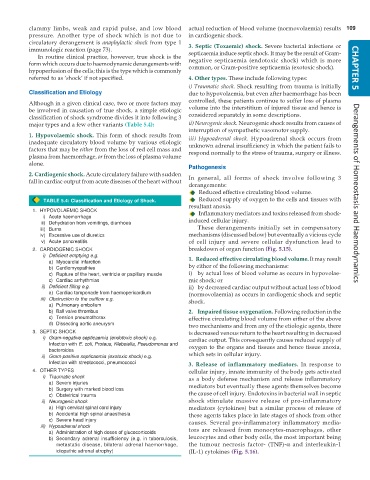
TABLE 5.4: Classification and Etiology of Shock. Reduced supply of oxygen to the cells and tissues with
resultant anoxia.
1. HYPOVOLAEMIC SHOCK Inflammatory mediators and toxins released from shock-
i) Acute haemorrhage
ii) Dehydration from vomitings, diarrhoea induced cellular injury.
iii) Burns These derangements initially set in compensatory
iv) Excessive use of diuretics mechanisms (discussed below) but eventually a vicious cycle
v) Acute pancreatitis of cell injury and severe cellular dysfunction lead to
2. CARDIOGENIC SHOCK breakdown of organ function (Fig. 5.15).
i) Deficient emptying e.g. 1. Reduced effective circulating blood volume. It may result
a) Myocardial infarction
b) Cardiomyopathies by either of the following mechanisms:
c) Rupture of the heart, ventricle or papillary muscle i) by actual loss of blood volume as occurs in hypovolae-
c) Cardiac arrhythmias mic shock; or
ii) Deficient filling e.g. ii) by decreased cardiac output without actual loss of blood
a) Cardiac tamponade from haemopericardium (normovolaemia) as occurs in cardiogenic shock and septic
iii) Obstruction to the outflow e.g. shock.
a) Pulmonary embolism
b) Ball valve thrombus 2. Impaired tissue oxygenation. Following reduction in the
c) Tension pneumothorax effective circulating blood volume from either of the above
d) Dissecting aortic aneurysm two mechanisms and from any of the etiologic agents, there
3. SEPTIC SHOCK is decreased venous return to the heart resulting in decreased
i) Gram-negative septicaemia (endotoxic shock) e.g. cardiac output. This consequently causes reduced supply of
Infection with E. coli, Proteus, Klebsiella, Pseudomonas and oxygen to the organs and tissues and hence tissue anoxia,
bacteroides
ii) Gram-positive septicaemia (exotoxic shock) e.g. which sets in cellular injury.
Infection with streptococci, pneumococci 3. Release of inflammatory mediators. In response to
4. OTHER TYPES cellular injury, innate immunity of the body gets activated
i) Traumatic shock as a body defense mechanism and release inflammatory
a) Severe injuries mediators but eventually these agents themselves become
b) Surgery with marked blood loss
c) Obstetrical trauma the cause of cell injury. Endotoxins in bacterial wall in septic
ii) Neurogenic shock shock stimulate massive release of pro-inflammatory
a) High cervical spinal cord injury mediators (cytokines) but a similar process of release of
b) Accidental high spinal anaesthesia these agents takes place in late stages of shock from other
c) Severe head injury causes. Several pro-inflammatory inflammatory media-
iii) Hypoadrenal shock tors are released from monocytes-macrophages, other
a) Administration of high doses of glucocorticoids
b) Secondary adrenal insufficiency (e.g. in tuberculosis, leucocytes and other body cells, the most important being
metastatic disease, bilateral adrenal haemorrhage, the tumour necrosis factor- (TNF)-α and interleukin-1
idiopathic adrenal atrophy) (IL-1) cytokines (Fig. 5.16).

