


Page 126 - Textbook of Pathology, 6th Edition
P. 126
110


     SECTION I


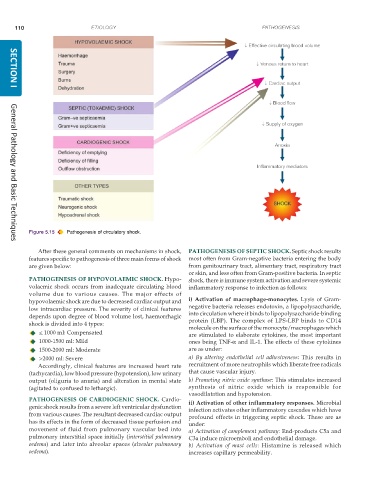
           Figure 5.15  Pathogenesis of circulatory shock.

     General Pathology and Basic Techniques
              After these general comments on mechanisms in shock,  PATHOGENESIS OF SEPTIC SHOCK. Septic shock results
           features specific to pathogenesis of three main forms of shock  most often from Gram-negative bacteria entering the body
           are given below:                                    from genitourinary tract, alimentary tract, respiratory tract
                                                               or skin, and less often from Gram-positive bacteria. In septic
           PATHOGENESIS OF HYPOVOLAEMIC SHOCK. Hypo-           shock, there is immune system activation and severe systemic
           volaemic shock occurs from inadequate circulating blood  inflammatory response to infection as follows:
           volume due to various causes. The major effects of
           hypovolaemic shock are due to decreased cardiac output and  i)  Activation of macrophage-monocytes. Lysis of Gram-
           low intracardiac pressure. The severity of clinical features  negative bacteria releases endotoxin, a lipopolysaccharide,
           depends upon degree of blood volume lost, haemorrhagic  into circulation where it binds to lipopolysaccharide-binding
           shock is divided into 4 types:                      protein (LBP). The complex of LPS-LBP binds to CD14
                                                               molecule on the surface of the monocyte/macrophages which
              < 1000 ml: Compensated                           are stimulated to elaborate cytokines, the most important
              1000-1500 ml: Mild                               ones being TNF-α and IL-1. The effects of these cytokines
              1500-2000 ml: Moderate                           are as under:
              >2000 ml: Severe                                 a) By altering endothelial cell adhesiveness: This results in
              Accordingly, clinical features are increased heart rate  recruitment of more neutrophils which liberate free radicals
           (tachycardia), low blood pressure (hypotension), low urinary  that cause vascular injury.
           output (oliguria to anuria) and alteration in mental state  b) Promoting nitric oxide synthase: This stimulates increased
           (agitated to confused to lethargic).                synthesis of nitric oxide which is responsible for
                                                               vasodilatation and hypotension.
           PATHOGENESIS OF CARDIOGENIC SHOCK. Cardio-          ii) Activation of other inflammatory responses. Microbial
           genic shock results from a severe left ventricular dysfunction  infection activates other inflammatory cascades which have
           from various causes. The resultant decreased cardiac output  profound effects in triggering septic shock. These are as
           has its effects in the form of decreased tissue perfusion and  under:
           movement of fluid from pulmonary vascular bed into  a) Activation of complement pathway: End-products C5a and
           pulmonary interstitial space initially (interstitial pulmonary  C3a induce microemboli and endothelial damage.
           oedema) and later into alveolar spaces (alveolar pulmonary  b) Activation of mast cells: Histamine is released which
           oedema).                                            increases capillary permeability.

