


Page 157 - Textbook of Pathology, 6th Edition
P. 157
1. Polymorphonuclear Neutrophils (PMNs)              141
                                                               Commonly called as neutrophils or polymorphs, these cells
                                                               along with basophils and eosinophils are known as
                                                               granulocytes due to the presence of granules in the
                                                               cytoplasm. These granules contain many substances like
                                                               proteases, myeloperoxidase, lysozyme, esterase, aryl   CHAPTER 6
                                                               sulfatase, acid and alkaline phosphatase, and cationic
                                                               proteins. The diameter of neutrophils ranges from 10 to
                                                               15  μm and are actively motile (Table 6.3,A). These cells
                                                               comprise 40-75% of circulating leucocytes and their number
                                                               is increased in blood (neutrophilia) and tissues in acute
                                                               bacterial infections. These cells arise in the bone marrow from
                                                               stem cells (Chapter 12).
                                                                  The functions of neutrophils in inflammation are as
                                                               follows:
                                                               i) Initial phagocytosis of microorganisms as they form the
                                                               first line of body defense in bacterial infection. The steps  Inflammation and Healing
                                                               involved are adhesion of neutrophils to vascular endo-
                                                               thelium, emigration through the vessel wall, chemotaxis,
                                                               engulfment, degranulation, killing and degradation of the
                                                               foreign material.
                                                               ii) Engulfment of antigen-antibody complexes and non-
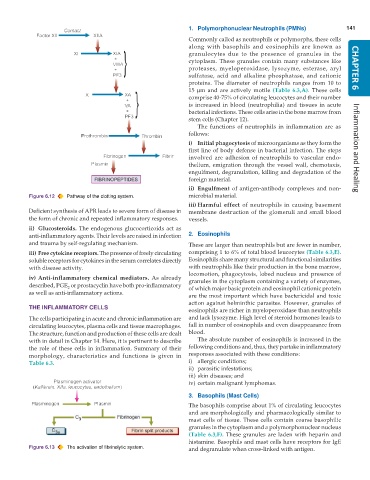
           Figure 6.12  Pathway of the clotting system.        microbial material.
                                                               iii) Harmful effect of neutrophils in causing basement
           Deficient synthesis of APR leads to severe form of disease in  membrane destruction of the glomeruli and small blood
           the form of chronic and repeated inflammatory responses.  vessels.
           ii) Glucosteroids. The endogenous glucocorticoids act as
           anti-inflammatory agents. Their levels are raised in infection  2. Eosinophils
           and trauma by self-regulating mechanism.            These are larger than neutrophils but are fewer in number,

           iii) Free cytokine receptors. The presence of freely circulating  comprising 1 to 6% of total blood leucocytes (Table 6.3,E).
           soluble receptors for cytokines in the serum correlates directly  Eosinophils share many structural and functional similarities
           with disease activity.                              with neutrophils like their production in the bone marrow,
                                                               locomotion, phagocytosis, lobed nucleus and presence of
           iv) Anti-inflammatory chemical mediators. As already  granules in the cytoplasm containing a variety of enzymes,
           described, PGE  or prostacyclin have both pro-inflammatory  of which major basic protein and eosinophil cationic protein
                       2
           as well as anti-inflammatory actions.
                                                               are the most important which have bactericidal and toxic
                                                               action against helminthic parasites. However, granules of
           THE INFLAMMATORY CELLS
                                                               eosinophils are richer in myeloperoxidase than neutrophils
           The cells participating in acute and chronic inflammation are  and lack lysozyme. High level of steroid hormones leads to
           circulating leucocytes, plasma cells and tissue macrophages.  fall in number of eosinophils and even disappearance from
           The structure, function and production of these cells are dealt  blood.
           with in detail in Chapter 14. Here, it is pertinent to describe  The absolute number of eosinophils is increased in the
           the role of these cells in inflammation. Summary of their  following conditions and, thus, they partake in inflammatory
           morphology, characteristics and functions is given in  responses associated with these conditions:
           Table 6.3.                                          i) allergic conditions;
                                                               ii) parasitic infestations;
                                                               iii) skin diseases; and
                                                               iv) certain malignant lymphomas.

                                                               3. Basophils (Mast Cells)
                                                               The basophils comprise about 1% of circulating leucocytes
                                                               and are morphologically and pharmacologically similar to
                                                               mast cells of tissue. These cells contain coarse basophilic
                                                               granules in the cytoplasm and a polymorphonuclear nucleus
                                                               (Table 6.3,F). These granules are laden with heparin and
                                                               histamine. Basophils and mast cells have receptors for IgE
           Figure 6.13  The activation of fibrinolytic system.  and degranulate when cross-linked with antigen.

