


Page 332 - Textbook of Pathology, 6th Edition
P. 332
316


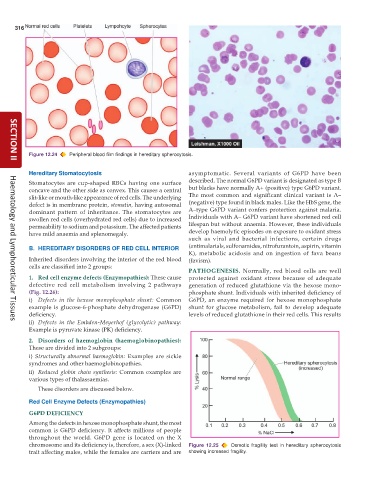
           Figure 12.24  Peripheral blood film findings in hereditary spherocytosis.
     SECTION II
           Hereditary Stomatocytosis                           asymptomatic. Several variants of G6PD have been
           Stomatocytes are cup-shaped RBCs having one surface  described. The normal G6PD variant is designated as type B
           concave and the other side as convex. This causes a central  but blacks have normally A+ (positive) type G6PD variant.
           slit-like or mouth-like appearance of red cells. The underlying  The most common and significant clinical variant is A–
           defect is in membrane protein, stomatin, having autosomal  (negative) type found in black males. Like the HbS gene, the
           dominant pattern of inheritance. The stomatocytes are  A–type G6PD variant confers protection against malaria.
           swollen red cells (overhydrated red cells) due to increased  Individuals with A– G6PD variant have shortened red cell
           permeability to sodium and potassium. The affected patients  lifespan but without anaemia. However, these individuals
           have mild anaemia and splenomegaly.                 develop haemolytic episodes on exposure to oxidant stress
                                                               such as viral and bacterial infections, certain drugs
           B. HEREDITARY DISORDERS OF RED CELL INTERIOR        (antimalarials, sulfonamides, nitrofurantoin, aspirin, vitamin
                                                               K), metabolic acidosis and on ingestion of fava beans
           Inherited disorders involving the interior of the red blood  (favism).
           cells are classified into 2 groups:
                                                               PATHOGENESIS.  Normally, red blood cells are well
           1. Red cell enzyme defects (Enzymopathies): These cause  protected against oxidant stress because of adequate
           defective red cell metabolism involving 2 pathways  generation of reduced glutathione via the hexose mono-
           (Fig. 12.26):                                       phosphate shunt. Individuals with inherited deficiency of
           i) Defects in the hexose monophosphate shunt:  Common  G6PD, an enzyme required for hexose monophosphate
           example is glucose-6-phosphate dehydrogenase (G6PD)  shunt for glucose metabolism, fail to develop adequate
           deficiency.                                         levels of reduced glutathione in their red cells. This results
           ii) Defects in the Embden-Meyerhof (glycolytic) pathway:
     Haematology and Lymphoreticular Tissues
           Example is pyruvate kinase (PK) deficiency.
           2. Disorders  of haemoglobin (haemoglobinopathies):
           These are divided into 2 subgroups:
           i)  Structurally abnormal haemoglobin:  Examples are sickle
           syndromes and other haemoglobinopathies.
           ii) Reduced globin chain synthesis: Common examples are
           various types of thalassaemias.
              These disorders are discussed below.
           Red Cell Enzyme Defects (Enzymopathies)
           G6PD DEFICIENCY
           Among the defects in hexose monophosphate shunt, the most
           common is G6PD deficiency. It affects millions of people
           throughout the world. G6PD gene is located on the X
           chromosome and its deficiency is, therefore, a sex (X)-linked  Figure 12.25  Osmotic fragility test in hereditary spherocytosis
           trait affecting males, while the females are carriers and are  showing increased fragility.

