


Page 682 - Textbook of Pathology, 6th Edition
P. 682
666
                                                                 chiefly polymorphs and sometimes monocytes (acute
                                                                 exudative lesion). There may be small deposits of fibrin
                                                                 within the capillary lumina and in the mesangium.
                                                                 ii) Tubules—Tubular changes are not very striking.
                                                                 There may be swelling and hyaline droplets in tubular
                                                                 cells, and tubular lumina may contain red cell casts.
                                                                 iii) Interstitium—There may be some degree of interstitial
                                                                 oedema and leucocytic infiltration.
                                                                 iv) Vessels—Changes in arteries and arterioles are seldom
                                                                 present in acute GN.
                                                                 Electron microscopic findings, aside from confirming the
                                                                 light microscopic findings, demonstrate the characteristic
                                                                 electron-dense irregular deposits  (‘humps’) on the
                                                                 epithelial side of the GBM. These deposits represent the
                                                                 immune complexes (Fig. 22.13).
                                                                 Immunofluorescence microscopy reveals that the irregular
                                                                 deposits along the GBM consist principally of IgG and
                                                                 complement C3.

                                                               CLINICAL FEATURES. Typically, the patient is a young
                                                               child, presenting with acute nephritic syndrome (page 660),
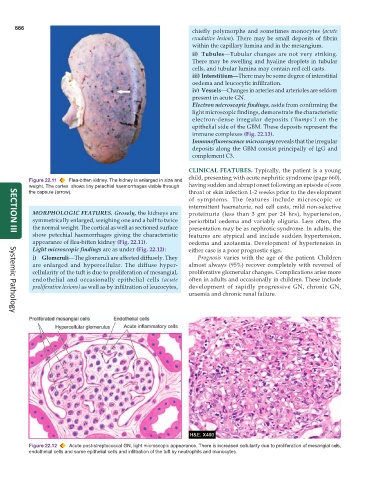
           Figure 22.11  Flea-bitten kidney. The kidney is enlarged in size and
           weight. The cortex  shows tiny petechial haemorrhages visible through  having sudden and abrupt onset following an episode of sore
           the capsule (arrow).                                throat or skin infection 1-2 weeks prior to the development
                                                               of symptoms. The features include microscopic or
                                                               intermittent haematuria, red cell casts, mild non-selective
            MORPHOLOGIC FEATURES. Grossly, the kidneys are     proteinuria (less than 3 gm per 24 hrs), hypertension,
            symmetrically enlarged, weighing one and a half to twice  periorbital oedema and variably oliguria. Less often, the
            the normal weight. The cortical as well as sectioned surface  presentation may be as nephrotic syndrome. In adults, the
            show petechial haemorrhages giving the characteristic  features are atypical and include sudden hypertension,
     SECTION III
            appearance of flea-bitten kidney (Fig. 22.11).     oedema and azotaemia. Development of hypertension in
            Light microscopic findings are as under (Fig. 22.12):  either case is a poor prognostic sign.
            i) Glomeruli—The glomeruli are affected diffusely. They  Prognosis varies with the age of the patient. Children
            are enlarged and hypercellular. The diffuse hyper-  almost always (95%) recover completely with reversal of
            cellularity of the tuft is due to proliferation of mesangial,  proliferative glomerular changes. Complications arise more
            endothelial and occasionally epithelial cells  (acute  often in adults and occasionally in children. These include
            proliferative lesions) as well as by infiltration of leucocytes,  development of rapidly progressive GN, chronic GN,
                                                               uraemia and chronic renal failure.


     Systemic Pathology


           Figure 22.12  Acute post-streptococcal GN, light microscopic appearance. There is increased cellularity due to proliferation of mesangial cells,
           endothelial cells and some epithelial cells and infiltration of the tuft by neutrophils and monocytes.

