


Page 738 - Textbook of Pathology, 6th Edition
P. 738
722                                                        Histologically, they are covered by an orderly stratified
                                                                 squamous epithelium. The stroma consists of loose fibrous
                                                                 and myxomatous connective tissue with some adipose
                                                                 tissue and blood vessels.

                                                               Papillary Hidradenoma (Hidradenoma Papilliferum)
                                                               This is a benign tumour arising from apocrine sweat glands
                                                               of the vulva. Most commonly, it is located in the labia or in
                                                               the perianal region as a small sharply circumscribed nodule.

                                                                 Histologically, the tumour lies in the dermis under a
                                                                 normal epidermis. The tumour consists of papillary
                                                                 structures composed of fibrovascular stalk and is covered
                                                                 by double layer of epithelial cells—a layer of flattened
                                                                 myoepithelial cells and an overlying layer of columnar
                                                                 cells.

                                                               Condyloma Acuminatum

                                                               Condyloma acuminata or anogenital warts are benign
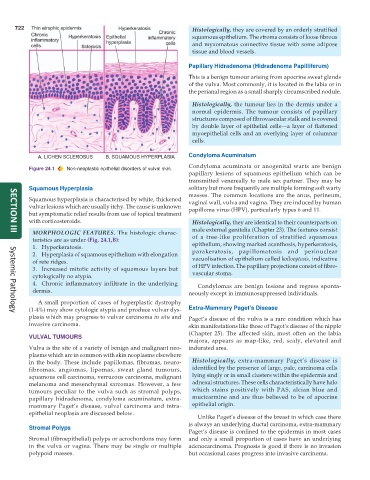
           Figure 24.1  Non-neoplastic epithelial disorders of vulval skin.
                                                               papillary lesions of squamous epithelium which can be
                                                               transmitted venereally to male sex partner. They may be
           Squamous Hyperplasia                                solitary but more frequently are multiple forming soft warty
                                                               masses. The common locations are the anus, perineum,
           Squamous hyperplasia is characterised by white, thickened  vaginal wall, vulva and vagina. They are induced by human
           vulvar lesions which are usually itchy. The cause is unknown  papilloma virus (HPV), particularly types 6 and 11.
           but symptomatic relief results from use of topical treatment
           with corticosteroids.                                 Histologically, they are identical to their counterparts on
                                                                 male external genitalia (Chapter 23). The features consist
            MORPHOLOGIC FEATURES. The histologic charac-
     SECTION III
            teristics are as under (Fig. 24.1,B):                of a tree-like proliferation of stratified squamous
            1. Hyperkeratosis.                                   epithelium, showing marked acanthosis, hyperkeratosis,
            2. Hyperplasia of squamous epithelium with elongation  parakeratosis, papillomatosis and perinuclear
            of rete ridges.                                      vacuolisation of epithelium called koilocytosis, indicative
            3. Increased mitotic activity of squamous layers but  of HPV infection. The papillary projections consist of fibro-
            cytologically no atypia.                             vascular stoma.
            4. Chronic inflammatory infiltrate in the underlying  Condylomas are benign lesions and regress sponta-
            dermis.                                            neously except in immunosuppressed individuals.

              A small proportion of cases of hyperplastic dystrophy
           (1-4%) may show cytologic atypia and produce vulvar dys-  Extra-Mammary Paget’s Disease
     Systemic Pathology
           plasia which may progress to vulvar carcinoma in situ and  Paget’s disease of the vulva is a rare condition which has
           invasive carcinoma.                                 skin manifestations like those of Paget’s disease of the nipple
                                                               (Chapter 25). The affected skin, most often on the labia
           VULVAL TUMOURS
                                                               majora, appears as map-like, red, scaly, elevated and
           Vulva is the site of a variety of benign and malignant neo-  indurated area.
           plasms which are in common with skin neoplasms elsewhere
           in the body. These include papillomas, fibromas, neuro-  Histologically, extra-mammary Paget’s disease is
           fibromas, angiomas, lipomas, sweat gland tumours,     identified by the presence of large, pale, carcinoma cells
           squamous cell carcinoma, verrucous carcinoma, malignant  lying singly or in small clusters within the epidermis and
           melanoma and mesenchymal sarcomas. However, a few     adnexal structures. These cells characteristically have halo
           tumours peculiar to the vulva such as stromal polyps,  which stains positively with PAS, alcian blue and
           papillary hidradenoma, condyloma acuminatum, extra-   mucicarmine and are thus believed to be of apocrine
           mammary Paget’s disease, vulval carcinoma and intra-  epithelial origin.
           epithelial neoplasia are discussed below.
                                                                  Unlike Paget’s disease of the breast in which case there
                                                               is always an underlying ductal carcinoma, extra-mammary
           Stromal Polyps
                                                               Paget’s disease is confined to the epidermis in most cases
           Stromal (fibroepithelial) polyps or acrochordons may form  and only a small proportion of cases have an underlying
           in the vulva or vagina. There may be single or multiple  adenocarcinoma. Prognosis is good if there is no invasion
           polypoid masses.                                    but occasional cases progress into invasive carcinoma.

