


Page 357 - 9780077418427.pdf
P. 357
/Users/user-f465/Desktop
          tiL12214_ch13_323-350.indd Page 334  9/3/10  6:14 PM user-f465
          tiL12214_ch13_323-350.indd Page 334  9/3/10  6:14 PM user-f465                                                /Users/user-f465/Desktop


                   the source and what shielding materials are between a person
                   and a source. A millirem is the unit of choice when low levels of
                   radiation are discussed.
                                                                           Biological damage  of damaging  Biological damage

                   RADIATION EXPOSURE                                           Threshold
                   Natural radioactivity is a part of your environment, and you   dose
                     receive between 100 and 500 millirems each year from nat-
                   ural sources. This radiation from natural sources is called
                     background radiation. Background radiation comes from
                   outer space in the form of cosmic rays and from unstable
                   isotopes in the ground, building materials, and foods. Many   0  Increasing radiation exposure  0  Increasing radiation exposure
                     activities and situations will increase your yearly exposure to   A            B
                   radiation. For example, the atmosphere absorbs some of the
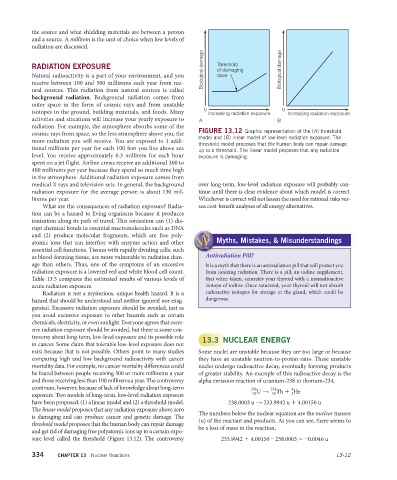
                                                                          FIGURE 13.12  Graphic representation of the (A) threshold
                   cosmic rays from space, so the less atmosphere above you, the
                                                                          model and (B) linear model of low-level radiation exposure. The
                   more radiation you will receive. You are exposed to 1 addi-
                                                                          threshold model proposes that the human body can repair damage
                   tional millirem per year for each 100 feet you live above sea   up to a threshold. The linear model proposes that any radiation
                   level. You receive approximately 0.3 millirem for each hour   exposure is damaging.
                   spent on a jet flight. Airline crews  receive an additional 300 to
                   400 millirems per year because they spend so much time high
                   in the atmosphere. Additional radiation exposure comes from
                   medical X rays and television sets. In general, the background   over long-term, low-level radiation exposure will probably con-
                   radiation exposure for the average person is about 130 mil-  tinue until there is clear evidence about which model is correct.
                   lirems per year.                                       Whichever is correct will not lessen the need for rational risks ver-
                      What are the consequences of radiation exposure? Radia-  sus cost-benefit analyses of all energy alternatives.
                   tion can be a hazard to living organisms because it produces
                   ionization along its path of travel. This ionization can (1) dis-
                   rupt chemical bonds in essential macromolecules such as DNA
                   and (2) produce molecular fragments, which are free poly-
                   atomic ions that can interfere with enzyme action and other   Myths, Mistakes, & Misunderstandings
                     essential cell functions. Tissues with rapidly dividing cells, such
                   as blood-forming tissue, are more vulnerable to radiation dam-  Antiradiation Pill?
                   age than others. Thus, one of the symptoms of an excessive   It is a myth that there is an antiradiation pill that will protect you
                   radiation exposure is a lowered red and white blood cell count.   from ionizing radiation. There is a pill, an iodine supplement,
                   Table 13.5 compares the estimated results of various levels of   that when taken, saturates your thyroid with a nonradioactive
                   acute radiation exposure.                                isotope of iodine. Once saturated, your thyroid will not absorb
                      Radiation is not a mysterious, unique health hazard. It is a   radioactive isotopes for storage in the gland, which could be
                   hazard that should be understood and neither ignored nor exag-  dangerous.
                   gerated. Excessive radiation exposure should be avoided, just as
                   you avoid excessive exposure to other hazards such as certain
                   chemicals, electricity, or even sunlight. Everyone agrees that exces-
                   sive radiation exposure should be avoided, but there is some con-
                   troversy about long-term, low-level exposure and its possible role   13.3 NUCLEAR ENERGY
                   in cancer. Some claim that tolerable low-level exposure does not
                   exist because that is not possible. Others point to many studies   Some nuclei are unstable because they are too large or because
                   comparing high and low background radioactivity with cancer   they have an unstable neutron-to-proton ratio. These unstable
                   mortality data. For exam ple, no cancer mortality differences could   nuclei undergo radioactive decay, eventually forming products
                   be found between  people receiving 500 or more millirems a year   of greater stability. An example of this radioactive decay is the
                   and those  receiving less than 100 millirems a year. The controversy   alpha emission reaction of uranium-238 to thorium-234,
                   continues, however, because of lack of knowledge about long-term        238    234    4
                                                                                                     U →          Th +         He
                                                                                             92
                                                                                                    90
                                                                                                         2
                   exposure. Two models of long-term, low-level radiation exposure
                   have been proposed: (1) a linear model and (2) a threshold model.   238.0003 u → 233.9942 u + 4.00150 u
                   The linear model proposes that any radiation exposure above zero
                                                                          The numbers below the nuclear equation are the nuclear masses
                   is damaging and can produce cancer and genetic damage. The
                                                                          (u) of the reactant and products. As you can see, there seems to
                   threshold model proposes that the human body can repair damage
                                                                          be a loss of mass in the reaction,
                   and get rid of damaging free polyatomic ions up to a certain expo-
                   sure level called the threshold (Figure 13.12). The controversy   233.9942 + 4.00150 – 238.0003 = –0.0046 u
                   334     CHAPTER 13 Nuclear Reactions                                                                13-12

