


Page 94 - 9780077418427.pdf
P. 94
/Users/user-f465/Desktop
          tiL12214_ch03_061-084.indd Page Sec3:71  9/1/10  9:34 PM user-f465
          tiL12214_ch03_061-084.indd Page Sec3:71  9/1/10  9:34 PM user-f465                                            /Users/user-f465/Desktop


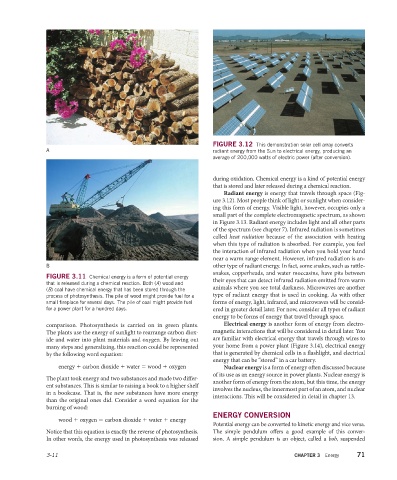
                                                                               FIGURE 3.12  This demonstration solar cell array converts
                       A                                                       radiant energy from the Sun to electrical energy, producing an
                                                                               average of 200,000 watts of electric power (after conversion).


                                                                               during oxidation. Chemical energy is a kind of potential energy
                                                                               that is stored and later released during a chemical reaction.
                                                                                  Radiant energy is energy that travels through space (Fig-
                                                                               ure 3.12). Most people think of light or sunlight when consider-
                                                                               ing this form of energy. Visible light, however, occupies only a
                                                                               small part of the complete electromagnetic spectrum, as shown
                                                                               in Figure 3.13. Radiant energy includes light and all other parts
                                                                               of the spectrum (see chapter 7). Infrared radiation is sometimes
                                                                               called  heat radiation because of the association with heating
                                                                               when this type of radiation is absorbed. For  example, you feel
                                                                               the interaction of infrared radiation when you hold your hand
                                                                               near a warm range element. However,  infrared radiation is an-
                       B                                                       other type of radiant energy. In fact, some snakes, such as rattle-

                                                                               snakes, copperheads, and water  moccasins, have pits between
                       FIGURE 3.11  Chemical energy is a form of potential energy
                                                                               their eyes that can detect infrared radiation emitted from warm
                       that is released during a chemical reaction. Both (A) wood and
                       (B) coal have chemical energy that has been stored through the   animals where you see total darkness. Microwaves are another
                       process of photosynthesis. The pile of wood might provide fuel for a   type of radiant energy that is used in cooking. As with other
                       small fireplace for several days. The pile of coal might provide fuel   forms of energy, light,  infrared, and microwaves will be consid-
                       for a power plant for a hundred days.                   ered in greater detail later. For now, consider all types of radiant
                                                                               energy to be forms of energy that travel through space.
                       comparison. Photosynthesis is carried on in green plants.   Electrical energy is another form of energy from electro-
                       The plants use the energy of sunlight to rearrange carbon diox-  magnetic interactions that will be considered in detail later. You
                       ide and water into plant materials and oxygen. By leaving out   are familiar with electrical energy that travels through wires to
                       many steps and generalizing, this reaction could be represented   your home from a power plant (Figure 3.14), electrical energy
                       by the following word equation:                         that is generated by chemical cells in a flashlight, and electrical
                                                                               energy that can be “stored” in a car battery.
                            energy + carbon dioxide + water = wood + oxygen       Nuclear energy is a form of energy often discussed because
                                                                               of its use as an energy source in power plants. Nuclear energy is
                       The plant took energy and two substances and made two differ-
                                                                               another form of energy from the atom, but this time, the energy
                       ent substances. This is similar to raising a book to a higher shelf
                                                                               involves the nucleus, the innermost part of an atom, and nuclear
                       in a bookcase. That is, the new substances have more energy
                                                                               interactions. This will be considered in detail in chapter 13.
                       than the original ones did. Consider a word equation for the
                       burning of wood:
                                                                               ENERGY CONVERSION
                            wood + oxygen = carbon dioxide + water + energy
                                                                               Potential energy can be converted to kinetic energy and vice versa.
                       Notice that this equation is exactly the reverse of photosynthesis.   The simple pendulum offers a good example of this conver-
                       In other words, the energy used in photosynthesis was  released   sion. A simple pendulum is an object, called a  bob, sus pended

                       3-11                                                                               CHAPTER 3  Energy   71

