


Page 298 - Robot Design Handbook ROBOCON Malaysia 2019
P. 298
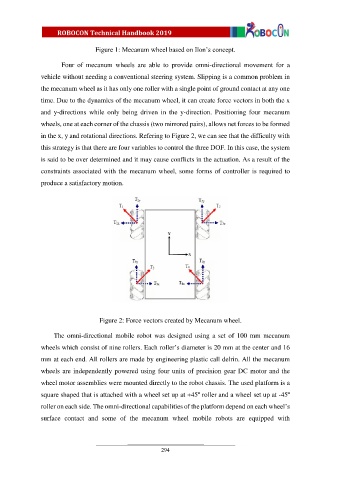
Figure 1: Mecanum wheel based on Ilon’s concept.

                       Four  of  mecanum  wheels  are  able  to  provide  omni-directional  movement  for  a

               vehicle without needing a conventional steering system. Slipping is a common problem in
               the mecanum wheel as it has only one roller with a single point of ground contact at any one

               time. Due to the dynamics of the mecanum wheel, it can create force vectors in both the x

               and  y-directions  while  only  being  driven  in  the  y-direction.  Positioning  four  mecanum
               wheels, one at each corner of the chassis (two mirrored pairs), allows net forces to be formed

               in the x, y and rotational directions. Refering to Figure 2, we can see that the difficulty with

               this strategy is that there are four variables to control the three DOF. In this case, the system
               is said to be over determined and it may cause conflicts in the actuation. As a result of the

               constraints associated with the mecanum wheel, some forms of controller is required to
               produce a satisfactory motion.


                                    Figure 2: Force vectors created by Mecanum wheel.


                    The omni-directional  mobile robot  was designed using  a set  of 100  mm  mecanum
               wheels which consist of nine rollers. Each roller’s diameter is 20 mm at the center and 16

               mm at each end. All rollers are made by engineering plastic call delrin. All the mecanum
               wheels are independently powered using four units of precision gear DC motor and the

               wheel motor assemblies were mounted directly to the robot chassis. The used platform is a

               square shaped that is attached with a wheel set up at +45º roller and a wheel set up at -45º
               roller on each side. The omni-directional capabilities of the platform depend on each wheel’s

               surface  contact  and  some  of  the  mecanum  wheel  mobile  robots  are  equipped  with


                                                          294

