


Page 22 - Drug Discovery and Development: Prospects and Challenges
P. 22
12  /  Drug Discovery and Development: Prospects and Challenges


                                                                O   OH
                                                                                Field Code Changed
                                                                                Field Code Changed
                                                            O   OH
              O       O                          O   OH  O      O       OH
               O      O                  HO    O  OH  O     O      OH
                  O                    HO        O       O
                  O
                                               O      O
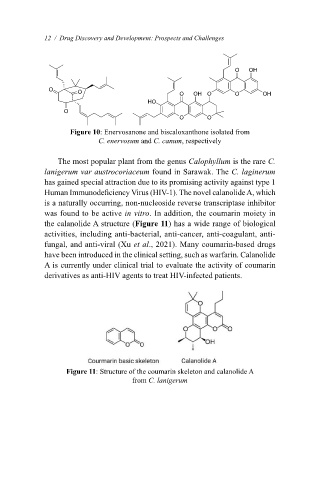
                    Figure 10: Enervosanone and biscaloxanthone isolated from

                            C. enervosum and C. canum, respectively

            Figure 10: Enervosanone and biscaloxanthone isolated from C. enervosum and C. canum,
                 The most popular plant from the genus Calophyllum is the rare C.
                                      respectively
             lanigerum var austrocoriaceum found in Sarawak. The C. laginerum

             has gained special attraction due to its promising activity against type 1
              The most popular  plant  from  the  genus  Calophyllum  is  the  rare  C.  lanigerum  var
             Human Immunodeficiency Virus (HIV-1). The novel calanolide A, which
         austrocoriaceum found in Sarawak. The C. laginerum has gained special attraction due to its promising
             is a naturally occurring, non-nucleoside reverse transcriptase inhibitor
         activity against type 1 Human Immunodeficiency Virus (HIV-1). The novel calanolide A, which is a
             was found to be active in vitro. In addition, the coumarin moiety in
         naturally occurring, non-nucleoside reverse transcriptase inhibitor was found to be active in vitro. In
             the calanolide A structure (Figure 11) has a wide range of biological
         addition, the coumarin moiety in the calanolide A structure (Figure 11) has a wide range of biological
             activities, including anti-bacterial, anti-cancer, anti-coagulant, anti-
         activities, including anti-bacterial, anti-cancer, anti-coagulant, anti-fungal, and anti-viral (Xu et al.,
             fungal, and anti-viral (Xu et al., 2021). Many coumarin-based drugs
         2021). Many coumarin-based drugs have been introduced in the clinical setting, such as warfarin.
             have been introduced in the clinical setting, such as warfarin. Calanolide
         Calanolide A is currently under clinical trial to evaluate the activity of coumarin derivatives as anti-
             A is currently under clinical trial to evaluate the activity of coumarin
         HIV agents to treat HIV-infected patients.
             derivatives as anti-HIV agents to treat HIV-infected patients.


                   Figure 11: Structure of the coumarin skeleton and calanolide A
               Figure 11: Structure of the coumarin skeleton and calanolide A from C. laginerum
                                     from C. lanigerum


                                                                          17

