


Page 613 - The Book of Caterpillars: A Life-Size Guide to Six Hundred Species From Around the World
P. 613
MOTH CATERPILLARS

                      FAMILY  Noctuidae
                  DISTRIBUTION  Mountain ranges in Europe, including the Pyrenees, Alps,
                           Apennines, Carpathians, and Caucasus Mountains
                     HABITAT  Dry and sunny rocky slopes, scree, and outcrops up to
                           5,900 ft (1,800 m) elevation

                  HOST PLANTS  Bell ower (Campanula spp.)
                      NOTE  Alpine caterpillar that is found on rocky mountain slopes
             CONSERVATION STATUS  Not evaluated, but classed as endangered in parts of its range


                                                                                   ADULT WINGSPAN
                                                                                  1½–1⅝ in (38–42 mm)
                                                                                  CATERPILLAR LENGTH


                                                                                  1⅜–2 in (35–50 mm)
            CUCULLIA CAMPANULAE
            CUCULLIA CAMPANULAE                                                                  611
            FREYER, 1831


            Cucullia campanulae caterpillars hatch from eggs laid on the
            leaves of the host plant, which is the source of the species’
            scienti c name. The larvae are active over the summer months,

            from June to September, feeding on clumps of bellflowers
            growing among the rocks. At higher altitudes, mostly in the
            Alps, they are seen only in August. Parasitism of the caterpillars
            by parasitic wasps is common, and healthy, unparasitized
            individuals tend to be found hiding on the ground or
            under plants during the day, only emerging at night to feed.
            The caterpillars overwinter under rocks, which is where
            pupation takes place.


            This alpine moth is on the wing from late May to July, and there
            is a single generation. The species has been endangered by
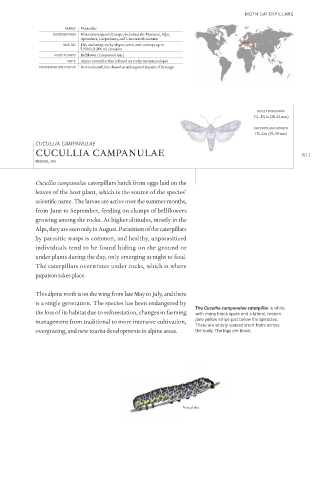
            the loss of its habitat due to reforestation, changes in farming   The Cucullia campanulae caterpillar is white
                                                               with many black spots and a lateral, broken,
            management from traditional to more intensive cultivation,   pale yellow stripe just below the spiracles.
                                                               There are widely spaced short hairs across
            overgrazing, and new tourist developments in alpine areas.   the body. The legs are black.


                                                           Actual size

