


Page 280 - (DK) Ocean - The Definitive Visual Guide
P. 280
278     ANIMAL LFE


               Feeding                                                  SPECIES-SPECIFIC DENTICLES
                                                                        The denticles on a mollusc’s
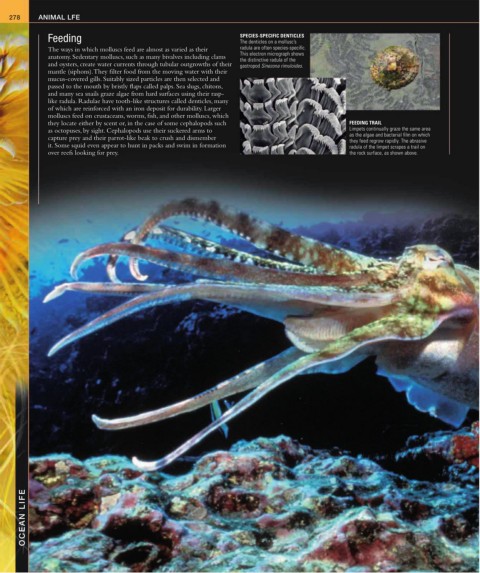
               The ways in which molluscs feed are almost as varied as their    radula are often species-specific.
               anatomy. Sedentary molluscs, such as many bivalves including clams   This electron micrograph shows
                                                                        the distinctive radula of the
               and oysters, create water currents through tubular outgrowths of their   gastropod Sinezona rimuloides.
               mantle (siphons). They filter food from the moving water with their
               mucus-covered gills. Suitably sized particles are then selected and
               passed to the mouth by bristly flaps called palps. Sea slugs, chitons,
               and many sea snails graze algae from hard surfaces using their rasp-
               like radula. Radulae have tooth-like structures called denticles, many
               of which are reinforced with an iron deposit for durability. Larger
               molluscs feed on crustaceans, worms, fish, and other molluscs, which
               they locate either by scent or, in the case of some cephalopods such                      FEEDING TRAIL
               as octopuses, by sight. Cephalopods use their suckered arms to                            Limpets continually graze the same area
               capture prey and their parrot-like beak to crush and dismember                            as the algae and bacterial film on which
                                                                                                         they feed regrow rapidly. The abrasive
               it. Some squid even appear to hunt in packs and swim in formation                         radula of the limpet scrapes a trail on
               over reefs looking for prey.                                                              the rock surface, as shown above.


        OCEAN LIFE

