


Page 381 - (DK) Ocean - The Definitive Visual Guide
P. 381
379


                                                                                                        HUMAN IMPACT
                                                                                                        SEA BIRDS UNDER
                                                                                                        THREAT

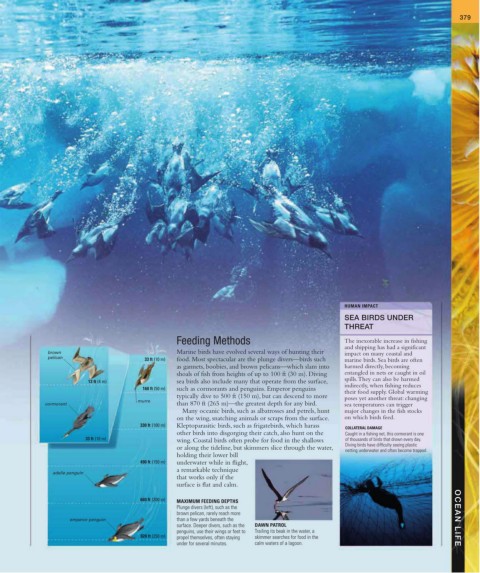
                                                      Feeding Methods                                   The inexorable increase in fishing
                                                                                                        and shipping has had a significant
               brown                                  Marine birds have evolved several ways of hunting their   impact on many coastal and
               pelican                      33 ft (10 m)  food. Most spectacular are the plunge divers—birds such    marine birds. Sea birds are often
                                                      as gannets, boobies, and brown pelicans—which slam into   harmed directly, becoming
                                                      shoals of fish from heights of up to 100 ft (30 m). Diving   entangled in nets or caught in oil
                           13 ft (4 m)                sea birds also include many that operate from the surface,   spills. They can also be harmed
                                           160 ft (50 m)  such as cormorants and penguins. Emperor penguins   indirectly, when fishing reduces
                                                                                                        their food supply. Global warming
                                                      typically dive to 500 ft (150 m), but can descend to more   poses yet another threat: changing
                                          murre
              cormorant                               than 870 ft (265 m)—the greatest depth for any bird.   sea temperatures can trigger
                                                       Many oceanic birds, such as albatrosses and petrels, hunt   major changes in the fish stocks
                                                      on the wing, snatching animals or scraps from the surface.   on which birds feed.
                                           330 ft (100 m)  Kleptoparasitic birds, such as frigatebirds, which harass   COLLATERAL DAMAGE
                                                      other birds into disgorging their catch, also hunt on the   Caught in a fishing net, this cormorant is one
                          33 ft (10 m)                wing. Coastal birds often probe for food in the shallows    of thousands of birds that drown every day.
                                                                                                        Diving birds have difficulty seeing plastic
                                                      or along the tideline, but skimmers slice through the water,
                                                                                                        netting underwater and often become trapped.
                                                      holding their lower bill
                                           490 ft (150 m)  underwater while in flight,
                                                      a remarkable technique
                 adelie penguin
                                                      that works only if the
                                                      surface is flat and calm.

                                           660 ft (200 m)  MAXIMUM FEEDING DEPTHS
                                                      Plunge divers (left), such as the
                                                      brown pelican, rarely reach more
                      emperor penguin                 than a few yards beneath the                                                       OCEAN LIFE
                                                      surface. Deeper divers, such as the   DAWN PATROL
                                                      penguins, use their wings or feet to   Trailing its beak in the water, a
                                           820 ft (250 m)  propel themselves, often staying   skimmer searches for food in the
                                                      under for several minutes.  calm waters of a lagoon.

