


Page 17 - Amphibian
P. 17
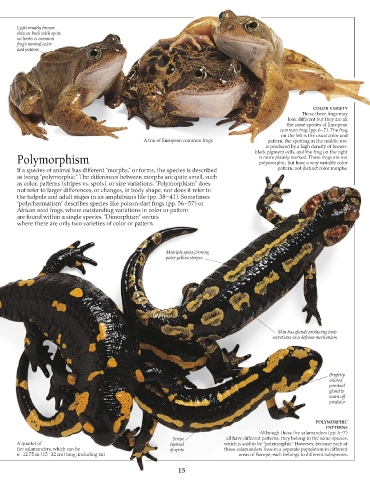
Light muddy brown
       skin on back with spots
       on limbs is common
       frog’s normal color
       and pattern


                                                                                                         COLOR VARIETY
                                                                                                     These three frogs may
                                                                                                look different but they are all
                                                                                                the same species of European
                                                                                              common frog (pp. 6–7). The frog
                                                                                              on the left is the usual color and
                                                 A trio of European common frogs          pattern, the spotting in the middle one
                                                                                         is produced by a high density of brown-
                                                                                     black pigment cells, and the frog on the right
       Polymorphism                                                                    is more plainly marked. These frogs are not
                                                                                       polymorphic, but have a very variable color
       If a species of animal has different “morphs,” or forms, the species is described     pattern, not distinct color morphs.
       as being “polymorphic.” The differences between morphs are quite small, such
       as color, patterns (stripes vs. spots), or size variations. “Polymorphism” does
       not refer to larger differences, or changes, in body shape, nor does it refer to
       the tadpole and adult stages in an amphibian’s life (pp. 38–41). Sometimes
       “polychromatism” describes species like poison-dart frogs (pp. 56–57) or
       African reed frogs, where outstanding variations in color or pattern
       are found within a single species. “Dimorphism” occurs
       where there are only two varieties of color or pattern.


                                                        Multiple spots forming
                                                        paler yellow stripes


                                                                                             Skin has glands producing toxic
                                                                                           secretions as a defense mechanism


                                                                                                              Brightly
                                                                                                              colored
                                                                                                              parotoid
                                                                                                              gland to
                                                                                                              warn off
                                                                                                              predator


                                                                                                          POLYMORPHIC
                                                                                                             PATTERNS
                                                                                       Although these fire salamanders (pp. 6–7)
                                                          Stripe            all have different patterns, they belong to the same species,
       A quartet of                                      instead           which is said to be “polymorphic.” However, because each of
       fire salamanders, which can be                    of spots          these salamanders lives in a separate population in different
       6–12.75 in (15–32 cm) long, including tail                               areas of Europe, each belongs to different subspecies.

                                                            15

