


Page 29 - Dinosaur (DK Eyewitness Books)
P. 29
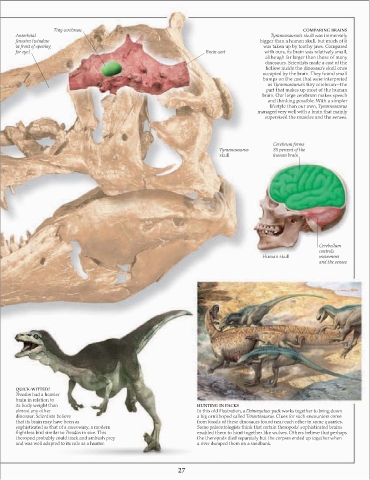
Tiny cerebrum                                                                     COMPARING BRAINS
      Antorbital                                                                           Tyrannosaurus’s skull was immensely
      fenestra (window                                                                 bigger than a human skull, but much of it
      in front of opening                                                               was taken up by toothy jaws. Compared
      for eye)                                                       Brain cast          with ours, its brain was relatively small,
                                                                                         although far larger than those of many
                                                                                         dinosaurs. Scientists made a cast of the
                                                                                         hollow inside the dinosaur’s skull once
                                                                                        occupied by the brain. They found small
                                                                                        bumps on the cast that were interpreted
                                                                                          as Tyrannosaurus’s tiny cerebrum—the
                                                                                         part that makes up most of the human
                                                                                        brain. Our large cerebrum makes speech
                                                                                          and thinking possible. With a simpler
                                                                                          lifestyle than our own, Tyrannosaurus
                                                                                      managed very well with a brain that mainly
                                                                                         supervised the muscles and the senses.


                                                                                           Cerebrum forms
                                                                          Tyrannosaurus    85 percent of the
                                                                          skull            human brain


                                                                                                           Cerebellum
                                                                                                           controls
                                                                                        Human skull        movement
                                                                                                           and the senses


      48,&.ʜ:,77('"
      Troodon had a heavier
      brain in relation to
      its body weight than                                        HUNTING IN PACKS
      almost any other                                            In this old illustration, a Deinonychus pack works together to bring down
      dinosaur. Scientists believe                                a big ornithopod called Tenontosaurus. Clues for such encounters come
      that its brain may have been as                             from fossils of these dinosaurs found near each other in some quarries.
      sophisticated as that of a cassowary, a modern              Some paleontologists think that certain theropods’ sophisticated brains
      flightless bird similar to Troodon in size. This            enabled them to hunt together like wolves. Others believe that perhaps
      theropod probably could track and ambush prey               the theropods died separately but the corpses ended up together when
      and was well adapted to its role as a hunter.               a river dumped them on a sandbank.


                                                            27

