


Page 33 - Dinosaur (DK Eyewitness Books)
P. 33
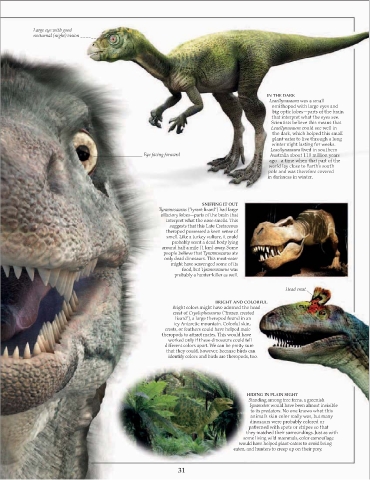
Large eye with good
            nocturnal (night) vision


                                                                                         IN THE DARK
                                                                                          Leaellynasaura was a small
                                                                                           ornithopod with large eyes and
                                                                                           big optic lobes—parts of the brain
                                                                                           that interpret what the eyes see.
                                                                                           Scientists believe this means that
                                                                                           Leaellynasaura could see well in
                                                                                           the dark, which helped this small
                                                                                           plant-eater to live through a long
                                                                                           winter night lasting for weeks.
                                                                                           Leaellynasaura lived in southern
                                                 Eye facing forward                       Australia about 110 million years
                                                                                          ago—a time when that part of the
                                                                                          world lay close to Earth’s south
                                                                                          pole and was therefore covered
                                                                                          in darkness in winter.


                                                                    SNIFFING IT OUT
                                                      Tyrannosaurus (“tyrant lizard”) had large
                                                      olfactory lobes—parts of the brain that
                                                        interpret what the nose smells. This
                                                         suggests that this Late Cretaceous
                                                        theropod possessed a keen sense of
                                                        smell. Like a turkey vulture, it could
                                                          probably scent a dead body lying
                                                       around half a mile (1 km) away. Some
                                                       people believe that Tyrannosaurus ate
                                                       only dead dinosaurs. This meat-eater
                                                          might have scavenged some of its
                                                             food, but Tyrannosaurus was
                                                           probably a hunter-killer as well.

                                                                                               Head crest

                                                                        BRIGHT AND COLORFUL
                                                          Bright colors might have adorned the head
                                                          crest of Cryolophosaurus (“frozen crested
                                                           lizard”), a large theropod found in an
                                                           icy Antarctic mountain. Colorful skin,
                                                        crests, or feathers could have helped male
                                                      theropods to attract mates. This would have
                                                         worked only if these dinosaurs could tell
                                                        different colors apart. We can be pretty sure
                                                        that they could, however, because birds can
                                                         identify colors and birds are theropods, too.


                                                                                   HIDING IN PLAIN SIGHT
                                                                                   Standing among tree ferns, a greenish
                                                                                    Iguanodon would have been almost invisible
                                                                                    to its predators. No one knows what this
                                                                                    animal’s skin color really was, but many
                                                                                    dinosaurs were probably colored or
                                                                                   patterned with spots or stripes so that
                                                                                  they matched their surroundings. Just as with
                                                                                 some living wild mammals, color camouflage
                                                                                would have helped plant-eaters to avoid being
                                                                              eaten, and hunters to creep up on their prey.


                                                            31

