


Page 30 - Dinosaur (DK Eyewitness Books)
P. 30
Horns and head crests                                                       7+5((ʜ+251(' )$&(
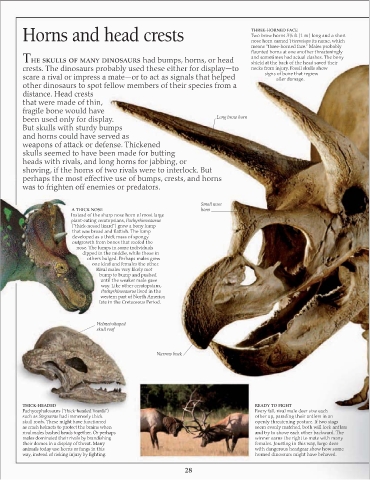
                                                                                    Two brow horns 3½ ft (1 m) long and a short
                                                                                    nose horn earned Triceratops its name, which
                                                                                    means “three-horned face.” Males probably
                                                                                    flaunted horns at one another threateningly
        TȩȦ ȴȬȶȭȭȴ Ȱȧ ȮȢȯȺ ȥȪȯȰȴȢȶȳȴ had bumps, horns, or head                      and sometimes had actual clashes. The bony
                                                                                    shield at the back of the head saved their
        crests. The dinosaurs probably used these either for display—to             necks from injury. Fossil skulls show
                                                                                         signs of bone that regrew
        scare a rival or impress a mate—or to act as signals that helped                    after damage.
        other dinosaurs to spot fellow members of their species from a
        distance. Head crests
        that were made of thin,
        fragile bone would have
        been used only for display.                                      Long brow horn
        But skulls with sturdy bumps
        and horns could have served as
        weapons of attack or defense. Thickened
        skulls seemed to have been made for butting
        heads with rivals, and long horns for jabbing, or
        shoving, if the horns of two rivals were to interlock. But
        perhaps the most effective use of bumps, crests, and horns
        was to frighten off enemies or predators.


                                                                   Small nose
                         $ 7+,&. 126(                              horn
                         Instead of the sharp nose horn of most large
                         plant-eating ceratopsians, Pachyrhinosaurus
                         (“thick-nosed lizard”) grew a bony lump
                         that was broad and flattish. The lump
                         developed as a thick mass of spongy
                         outgrowth from bones that roofed the
                          nose. The lumps in some individuals
                            dipped in the middle, while those in
                              others bulged. Perhaps males grew
                               one kind and females the other.
                                 Rival males very likely met
                                  bump to bump and pushed
                                  until the weaker male gave
                                  way. Like other ceratopsians,
                                  Pachyrhinosaurus lived in the
                                  western part of North America
                                  late in the Cretaceous Period.


                                 Helmet-shaped
                                 skull roof


                                                     Narrow beak


        7+,&.ʜ+($'('                                                                 READY TO FIGHT
        Pachycephalosaurs (“thick-headed lizards”)                                   Every fall, rival male deer size each
        such as Stegoceras had immensely thick                                       other up, parading their antlers in an
        skull roofs. These might have functioned                                     openly threatening posture. If two stags
        as crash helmets to protect the brains when                                  seem evenly matched, both will lock antlers
        rival males bashed heads together. Or perhaps                                and try to shove each other backward. The
        males dominated their rivals by brandishing                                  winner earns the right to mate with many
        their domes in a display of threat. Many                                     females. Jousting in this way, large deer
        animals today use horns or fangs in this                                     with dangerous headgear show how some
        way, instead of risking injury by fighting.                                  horned dinosaurs might have behaved.

                                                              28

