


Page 35 - Dinosaur (DK Eyewitness Books)
P. 35
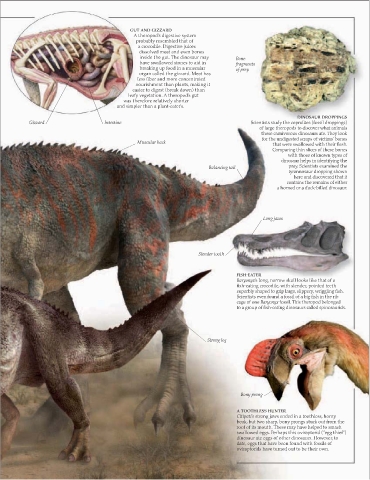
GUT AND GIZZARD
                                             A theropod’s digestive system
                                              probably resembled that of
                                               a crocodile. Digestive juices
                                               dissolved meat and even bones
                                               inside the gut. The dinosaur may   Bone
                                               have swallowed stones to aid in   fragments
                                               breaking up food in a muscular   of prey
                                               organ called the gizzard. Meat has
                                              less fiber and more concentrated
                                              nourishment than plants, making it
                                             easier to digest (break down) than
                                           leafy vegetation. A theropod’s gut
                                          was therefore relatively shorter
                                        and simpler than a plant-eater’s.
                                                                                                   DINOSAUR DROPPINGS
           Gizzard                  Intestine                                       Scientists study the coprolites (fossil droppings)
                                                                                       of large theropods to discover what animals
                                                                                       these carnivorous dinosaurs ate. They look
                                                                                        for the undigested scraps of victims’ bones
                                              Muscular back
                                                                                           that were swallowed with their flesh.
                                                                                           Comparing thin slices of these bones
                                                                                                with those of known types of
                                                                                              dinosaur helps in identifying the
                                                                      Balancing tail             prey. Scientists examined the
                                                                                                tyrannosaur dropping shown
                                                                                                  here and discovered that it
                                                                                                contains the remains of either
                                                                                             a horned or a duck-billed dinosaur.


                                                                                        Long jaws


                                                                   Slender tooth


                                                                               ),6+ʜ($7(5
                                                                               Baryonyx’s long, narrow skull looks like that of a
                                                                               fish-eating crocodile, with slender, pointed teeth
                                                                               superbly shaped to grip large, slippery, wriggling fish.
                                                                               Scientists even found a fossil of a big fish in the rib
                                                                               cage of one Baryonyx fossil. This theropod belonged
                                                                               to a group of fish-eating dinosaurs called spinosaurids.


                                                                      Strong leg


                                                                                 Bony prong

                                                                               A TOOTHLESS HUNTER
                                                                               Citipati’s strong jaws ended in a toothless, horny
                                                                               beak, but two sharp, bony prongs stuck out from the
                                                                               roof of its mouth. These may have helped to smash
                                                                               swallowed eggs. Perhaps this oviraptorid (“egg thief”)
                                                                               dinosaur ate eggs of other dinosaurs. However, to
                                                                               date, eggs that have been found with fossils of
                                                                               oviraptorids have turned out to be their own.

