


Page 45 - Dinosaur (DK Eyewitness Books)
P. 45
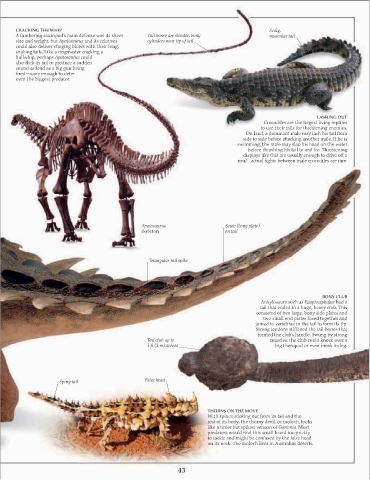
CRACKING THE WHIP                                                                   Scaly,
      A lumbering sauropod’s main defense was its sheer   Tail bones are slender, bony    muscular tail
      size and weight, but Apatosaurus and its relatives   cylinders near tip of tail
      could also deliver stinging blows with their long,
      snaking tails. Like a ringmaster cracking a
      bullwhip, perhaps Apatosaurus could
      also flick its tail to produce a sudden
      sound as loud as a big gun being
      fired—scary enough to deter
      even the biggest predator.


                                                                                                          LASHING OUT
                                                                                        Crocodiles are the largest living reptiles
                                                                                       to use their tails for threatening enemies.
                                                                                  On land, a dominant male may lash his tail from
                                                                                 side to side before attacking another male. If he is
                                                                                swimming, the male may slap his head on the water
                                                                                   before thrashing his tail to and fro. Threatening
                                                                                  displays like this are usually enough to drive off a
                                                                                rival—actual fights between male crocodiles are rare.


                                                Apatosaurus                 Scute (bony plate)
                                                skeleton                    on tail


                                                  Triangular tail spike


                                                                                                            BONY CLUB
                                                                                       Ankylosaurs such as Euoplocephalus had a
                                                                                       tail that ended in a huge, heavy club. This
                                                                                      consisted of two large, bony side plates and
                                                                                        two small end plates fused together and
                                                                                      joined to vertebrae in the tail to form its tip.
                                                                                      Strong tendons stiffened the tail bones that
                                                                                      formed the club’s handle. Swung by strong
                                                  Tail club up to                         muscles, the club could knock over a
                                                  3 ft (1 m) across                         big theropod or even break its leg.


                     Spiny tail                  False head


                                                                      THORNS ON THE MOVE
                                                                      With spines sticking out from its tail and the
                                                                      rest of its body, the thorny devil, or moloch, looks
                                                                      like a tinier but spikier version of Gastonia. Most
                                                                      predators would find this small lizard too prickly
                                                                      to tackle and might be confused by the false head
                                                                      on its neck. The moloch lives in Australia’s deserts.


                                                            43

