


Page 46 - Dinosaur (DK Eyewitness Books)
P. 46
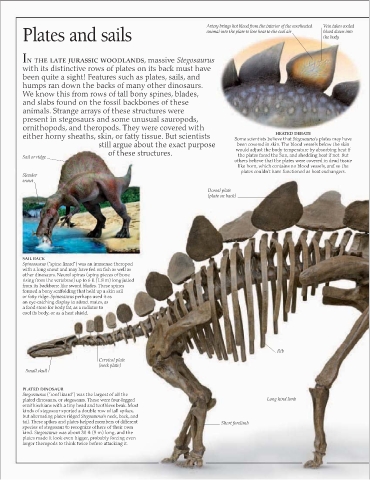
Artery brings hot blood from the interior of the overheated   Vein takes cooled
        Plates and sails                                             animal into the plate to lose heat to the cool air  blood down into
                                                                                                            the body


        Iȯ ȵȩȦ ȭȢȵȦ ȫȶȳȢȴȴȪȤ ȸȰȰȥȭȢȯȥȴ, massive Stegosaurus
         with its distinctive rows of plates on its back must have
         been quite a sight! Features such as plates, sails, and
         humps ran down the backs of many other dinosaurs.
         We know this from rows of tall bony spines, blades,
         and slabs found on the fossil backbones of these
         animals. Strange arrays of these structures were
         present in stegosaurs and some unusual sauropods,
         ornithopods, and theropods. They were covered with
                                                                                            HEATED DEBATE
         either horny sheaths, skin, or fatty tissue. But scientists           Some scientists believe that Stegosaurus’s plates may have
                                  still argue about the exact purpose          been covered in skin. The blood vessels below the skin
                                     of these structures.                      would adjust the body temperature by absorbing heat if
        Sail or ridge                                                           the plates faced the Sun, and shedding heat if not. But
                                                                               others believe that the plates were covered in dead tissue
                                                                                like horn, which contains no blood vessels, and so the
                                                                                 plates couldn’t have functioned as heat exchangers.
        Slender
        snout
                                                                      Dorsal plate
                                                                      (plate on back)


        SAIL BACK
        Spinosaurus (“spine lizard”) was an immense theropod
        with a long snout and may have fed on fish as well as
        other dinosaurs. Neural spines (spiny pieces of bone
        rising from the vertebrae) up to 6 ft (1.8 m) long jutted
        from its backbone like sword blades. These spines
        formed a bony scaffolding that held up a skin sail
        or fatty ridge. Spinosaurus perhaps used it as
        an eye-catching display to attract mates, as
        a food store for body fat, as a radiator to
        cool its body, or as a heat shield.


                                                                                             Rib
                                  Cervical plate
                                  (neck plate)
         Small skull


        PLATED DINOSAUR
        Stegosaurus (“roof lizard”) was the largest of all the
        plated dinosaurs, or stegosaurs. These were four-legged                          Long hind limb
        ornithischians with a tiny head and toothless beak. Most
        kinds of stegosaur sported a double row of tall spikes,
        but alternating plates ridged Stegosaurus’s neck, back, and
        tail. These spikes and plates helped members of different         Short forelimb
        species of stegosaur to recognize others of their own
        kind. Stegosaurus was about 30 ft (9 m) long, and the
        plates made it look even bigger, probably forcing even
        larger theropods to think twice before attacking it.

