


Page 162 - Complete Birds of Britain and Europe (DK - RSPB)
P. 162
CRANES AND BUSTARDS
       Order Gruiformes       Family Gruidae         Species Grus grus
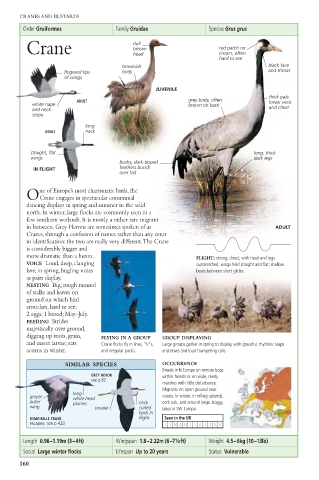
        Crane                     dull                 red patch on
                                  brown
                                                       crown, often
                                  head
                                                       hard to see
                               brownish                             black face
                 fingered tips  body                                and throat
                 of wings
                                        JUVENILE
                                                                    thick pale
                    ADULT                       grey body, often    lower neck
         white nape                             brown on back
         and neck-                                                  and chest
         stripe
                      long
            ADULT     neck
         straight, flat                                         long, thick
         wings                                                  dark legs
                               bushy, dark-tipped
         IN FLIGHT             feathers bunch
                               over tail
           ne of Europe’s most charismatic birds, the
        OCrane engages in spectacular communal
        dancing displays in spring and summer in the wild
        north. In winter, large flocks are commonly seen in a
        few southern wetlands. It is mostly a rather rare migrant
        in between. Grey Herons are sometimes spoken of as           ADULT
        Cranes, through a confusion of names rather than any error
        in identification: the two are really very different.The Crane
        is considerably bigger and
        more dramatic than a heron.               FLIGHT: strong, direct, with head and legs
        VOICE Loud, deep, clanging                outstretched, wings held straight and flat; shallow
        krro; in spring, bugling notes            beats between short glides.
        as pairs display.
        NESTING Big, rough mound
        of stalks and leaves on
        ground on which bird
        crouches, hard to see;
        2 eggs; 1 brood; May–July.
        FEEDING Strides
        majestically over ground,
        digging up roots, grain,  FLYING IN A GROUP  GROUP DISPLAYING
        and insect larvae; eats   Crane flocks fly in lines, “V”s,  Large groups gather in spring to display, with graceful, rhythmic leaps
        acorns in winter.  and irregular packs.  and bows and loud trumpeting calls.
                 SIMILAR SPECIES         OCCURRENCE
                                         Breeds in N Europe on remote bogs
                        GREY HERON       within forests or on wide, reedy
                        see p.82
                                         marshes with little disturbance.
                                         Migrants on open ground near
                   long
        greyer     white head            coasts. In winter, in rolling uplands,
        outer      plumes           neck  cork oak, and around large, boggy
        wing             smaller    curled  lakes in SW Europe.
                                    back in
        DEMOISELLE CRANE            flight  Seen in the UK
        escapee; see p.420                JF M A  M J  JA S ON D
       Length  0.96–1.19m (3–4ft)  Wingspan  1.8–2.22m (6–7 1 ⁄4ft)  Weight  4.5–6kg (10–13lb)
       Social  Large winter flocks  Lifespan  Up to 20 years  Status  Vulnerable
      160

