


Page 23 - Human Environment Interface (3)
P. 23
Novel Fluorescent Probes for the Oxidative Milieu

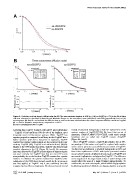
Figure 5. Cysteine restricts simple diffusion in the ER. The autocorrelation function of SGFP (n = 146) or cfSGFP2 (n = 172) in the ER of living
cells was measured as described in Materials and Methods. Shown are the normalized mean (solid lines) and CI95 (perpendicular bars) of the
measurements (A). Best fits and residuals for diffusion time tD and fraction were obtained when the three component diffusion model was applied
(B). ss-cfSGFP2 showed a steeper decay compared to ss-SGFP2.
doi:10.1371/journal.pone.0037551.g005

Cysteine-free TagRFP Variants cgfTagRFP and cgfmKate2                  rounds of saturated mutagenesis to look for replacement of the
   TagRFP [3] and mCherry [38] are two of the brightest, most          cysteine residues of TagRFP(C222S). We found that one set of
                                                                       mutations, C26A/C114M/C172V/C222S, could retain enough
frequently used red fluorescent proteins. While TagRFP has             brightness and we called this TagRFP mutant cfTagRFP
superior properties compared to mCherry in that TagRFP has a           (Figure 8A, lane3).
higher quantum yield and is less prone to aggregate, TagRFP
contains four cysteine residues which are also conserved in its color     Since cfTagRFP contains a single N-glycosylation site at N71,
variants, TagBFP [39], TagGFP and mKate/mKate2 [39,40].                we wondered if this amino acid could be replaced with another
Similar to the GFP family of proteins, TagRFP also formed large        amino acid to generate a second fluorescent mutant of TagRFP.
covalent oligomers in the ER (Figure 8A, lane2). No monomer            To this end, we performed a saturated mutagenesis on N71 and
band was observed for TagRFP and the degree of oligomerization         found that replacement of N71 with lysine generated another
was more extensive for TagRFP than that seen for GFP and is            mutant which retained a brightness almost equal to cfTagRFP and
most probably due to the fact that TagRFP contains four cysteine       we named it cgf(cysteine- and glycan-free)TagRFP. The difference
residues. To eliminate the cysteine residues from TagRFP, serine       in the migration of the major bands in lane 7 and 8 of Figure 8A
substitution of the C222 that is located outside the b-can structure   would reflect the mass of a single N-linked oligosaccharide. To
was first applied to TagRFP and it was confirmed that this             confirm this, we used tunicamycin, which inhibits N-glycosylation
mutation had no effect on brightness. We then performed several        by blocking synthesis of dolichol-core oligosaccharides, to treat the

PLoS ONE | www.plosone.org                                             7 May 2012 | Volume 7 | Issue 5 | e37551

