


Page 434 - First Aid for the USMLE Step 1 2020, Thirtieth edition [MedicalBooksVN.com]_Neat
P. 434
390 seCtion iii Gastrointestinal ` gastrointestinal—PatHology Gastrointestinal ` gastrointestinal—PatHology
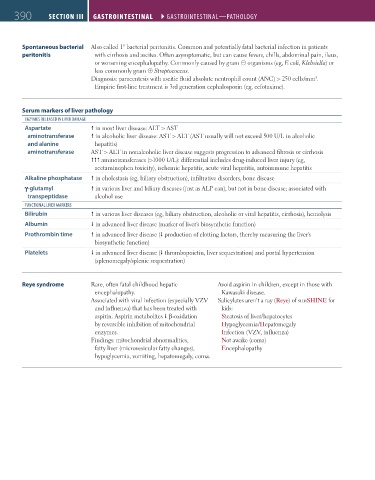
Spontaneous bacterial Also called 1° bacterial peritonitis. Common and potentially fatal bacterial infection in patients
peritonitis with cirrhosis and ascites. Often asymptomatic, but can cause fevers, chills, abdominal pain, ileus,
or worsening encephalopathy. Commonly caused by gram ⊝ organisms (eg, E coli, Klebsiella) or
less commonly gram ⊕ Streptococcus.
Diagnosis: paracentesis with ascitic fluid absolute neutrophil count (ANC) > 250 cells/mm .
3
Empiric first-line treatment is 3rd generation cephalosporin (eg, cefotaxime).
Serum markers of liver pathology
enZymes releaseD in liVer Damage
Aspartate in most liver disease: ALT > AST
aminotransferase in alcoholic liver disease: AST > ALT (AST usually will not exceed 500 U/L in alcoholic
and alanine hepatitis)
aminotransferase AST > ALT in nonalcoholic liver disease suggests progression to advanced fibrosis or cirrhosis
aminotransferases (>1000 U/L): differential includes drug-induced liver injury (eg,
acetaminophen toxicity), ischemic hepatitis, acute viral hepatitis, autoimmune hepatitis
Alkaline phosphatase in cholestasis (eg, biliary obstruction), infiltrative disorders, bone disease
γ-glutamyl in various liver and biliary diseases (just as ALP can), but not in bone disease; associated with
transpeptidase alcohol use
FUnCtional liVer marKers
Bilirubin in various liver diseases (eg, biliary obstruction, alcoholic or viral hepatitis, cirrhosis), hemolysis
Albumin in advanced liver disease (marker of liver’s biosynthetic function)
Prothrombin time in advanced liver disease ( production of clotting factors, thereby measuring the liver’s
biosynthetic function)
Platelets in advanced liver disease ( thrombopoietin, liver sequestration) and portal hypertension
(splenomegaly/splenic sequestration)
Reye syndrome Rare, often fatal childhood hepatic Avoid aspirin in children, except in those with
encephalopathy. Kawasaki disease.
Associated with viral infection (especially VZV Salicylates aren’t a ray (Reye) of sunSHINE for
and influenza) that has been treated with kids:
aspirin. Aspirin metabolites β-oxidation Steatosis of liver/hepatocytes
by reversible inhibition of mitochondrial Hypoglycemia/Hepatomegaly
enzymes. Infection (VZV, influenza)
Findings: mitochondrial abnormalities, Not awake (coma)
fatty liver (microvesicular fatty changes), Encephalopathy
hypoglycemia, vomiting, hepatomegaly, coma.
FAS1_2019_09-Gastrointestinal.indd 390 11/7/19 4:42 PM

