


Page 477 - First Aid for the USMLE Step 1 2020, Thirtieth edition [MedicalBooksVN.com]_Neat
P. 477
Hematology and oncology ` hematology and oncology—Pathology Hematology and oncology ` hematology and oncology—Pathology SectIon III 433
Leukemias (continued)
Chronic myelogenous Peak incidence: 45—85 years; median age: 64 years. Defined by the Philadelphia chromosome
leukemia (t[9;22], BCR-ABL) and myeloid stem cell proliferation. Presents with dysregulated production of
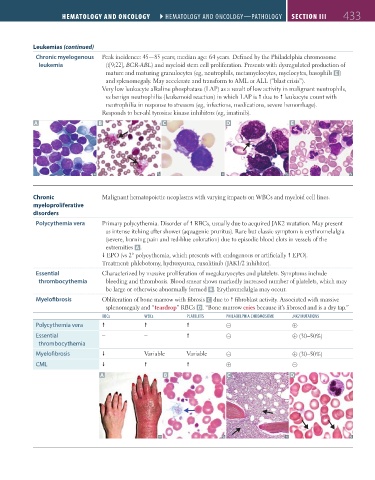
mature and maturing granulocytes (eg, neutrophils, metamyelocytes, myelocytes, basophils E )
and splenomegaly. May accelerate and transform to AML or ALL (“blast crisis”).
Very low leukocyte alkaline phosphatase (LAP) as a result of low activity in malignant neutrophils,
vs benign neutrophilia (leukemoid reaction) in which LAP is due to leukocyte count with
neutrophilia in response to stressors (eg, infections, medications, severe hemorrhage).
Responds to bcr-abl tyrosine kinase inhibitors (eg, imatinib).
A B C D E
Chronic Malignant hematopoietic neoplasms with varying impacts on WBCs and myeloid cell lines.
myeloproliferative
disorders
Polycythemia vera Primary polycythemia. Disorder of RBCs, usually due to acquired JAK2 mutation. May present
as intense itching after shower (aquagenic pruritus). Rare but classic symptom is erythromelalgia
(severe, burning pain and red-blue coloration) due to episodic blood clots in vessels of the
extremities A .
EPO (vs 2° polycythemia, which presents with endogenous or artificially EPO).
Treatment: phlebotomy, hydroxyurea, ruxolitinib (JAK1/2 inhibitor).
Essential Characterized by massive proliferation of megakaryocytes and platelets. Symptoms include
thrombocythemia bleeding and thrombosis. Blood smear shows markedly increased number of platelets, which may
be large or otherwise abnormally formed B . Erythromelalgia may occur.
Myelofibrosis Obliteration of bone marrow with fibrosis C due to fibroblast activity. Associated with massive
splenomegaly and “teardrop” RBCs D. “Bone marrow cries because it’s fibrosed and is a dry tap.”
RBcs WBcs PlateletS PhIladelPhIa chRomoSome JAK2 mUtatIonS
Polycythemia vera ⊝ ⊕
Essential − − ⊝ ⊕ (30–50%)
thrombocythemia
Myelofibrosis Variable Variable ⊝ ⊕ (30–50%)
CML ⊕ ⊝
A B C D
FAS1_2019_10-HemaOncol.indd 433 11/7/19 5:05 PM

