


Page 644 - First Aid for the USMLE Step 1 2020, Thirtieth edition [MedicalBooksVN.com]_Neat
P. 644
600 SeCTIOn III Renal ` RENAL—PAthoLogy Renal ` RENAL—PAthoLogy
Acute cystitis Inflammation of urinary bladder. Presents as suprapubic pain, dysuria, urinary frequency, urgency.
Systemic signs (eg, high fever, chills) are usually absent.
Risk factors include female sex (short urethra), sexual intercourse, indwelling catheter, diabetes
mellitus, impaired bladder emptying.
Causes:
E coli (most common)
Staphylococcus saprophyticus—seen in sexually active young women (E coli is still more
common in this group)
Klebsiella
Proteus mirabilis—urine has ammonia scent
Labs: ⊕ leukocyte esterase. ⊕ nitrites (indicate gram ⊝ organisms). Sterile pyuria (pyuria with
⊝ urine cultures) could suggest urethritis by Neisseria gonorrhoeae or Chlamydia trachomatis.
Treatment: antibiotics (eg, TMP-SMX, nitrofurantoin).
Pyelonephritis
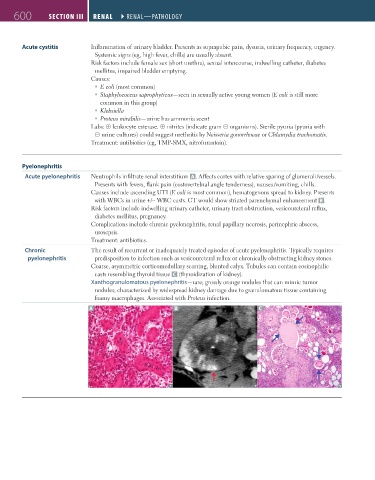
Acute pyelonephritis Neutrophils infiltrate renal interstitium A . Affects cortex with relative sparing of glomeruli/vessels.
Presents with fevers, flank pain (costovertebral angle tenderness), nausea/vomiting, chills.
Causes include ascending UTI (E coli is most common), hematogenous spread to kidney. Presents
with WBCs in urine +/− WBC casts. CT would show striated parenchymal enhancement B .
Risk factors include indwelling urinary catheter, urinary tract obstruction, vesicoureteral reflux,
diabetes mellitus, pregnancy.
Complications include chronic pyelonephritis, renal papillary necrosis, perinephric abscess,
urosepsis.
Treatment: antibiotics.
Chronic The result of recurrent or inadequately treated episodes of acute pyelonephritis. Typically requires
pyelonephritis predisposition to infection such as vesicoureteral reflux or chronically obstructing kidney stones.
Coarse, asymmetric corticomedullary scarring, blunted calyx. Tubules can contain eosinophilic
casts resembling thyroid tissue C (thyroidization of kidney).
Xanthogranulomatous pyelonephritis—rare; grossly orange nodules that can mimic tumor
nodules; characterized by widespread kidney damage due to granulomatous tissue containing
foamy macrophages. Associated with Proteus infection.
A B C
FAS1_2019_14-Renal.indd 600 11/7/19 5:42 PM

