


Page 646 - First Aid for the USMLE Step 1 2020, Thirtieth edition [MedicalBooksVN.com]_Neat
P. 646
602 SeCTIOn III Renal ` RENAL—PAthoLogy Renal ` RENAL—PAthoLogy
Acute tubular necrosis Most common cause of acute kidney injury in hospitalized patients. Spontaneously resolves in
many cases. Can be fatal, especially during initial oliguric phase. FE .
A Na
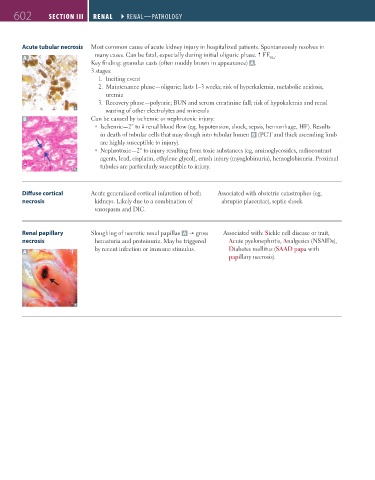
Key finding: granular casts (often muddy brown in appearance) A .
3 stages:
1. Inciting event
2. Maintenance phase—oliguric; lasts 1–3 weeks; risk of hyperkalemia, metabolic acidosis,
uremia
3. Recovery phase—polyuric; BUN and serum creatinine fall; risk of hypokalemia and renal
wasting of other electrolytes and minerals
B Can be caused by ischemic or nephrotoxic injury:
Ischemic—2° to renal blood flow (eg, hypotension, shock, sepsis, hemorrhage, HF). Results
in death of tubular cells that may slough into tubular lumen B (PCT and thick ascending limb
are highly susceptible to injury).
Nephrotoxic—2° to injury resulting from toxic substances (eg, aminoglycosides, radiocontrast
agents, lead, cisplatin, ethylene glycol), crush injury (myoglobinuria), hemoglobinuria. Proximal
tubules are particularly susceptible to injury.
Diffuse cortical Acute generalized cortical infarction of both Associated with obstetric catastrophes (eg,
necrosis kidneys. Likely due to a combination of abruptio placentae), septic shock.
vasospasm and DIC.
Renal papillary Sloughing of necrotic renal papillae A gross Associated with: Sickle cell disease or trait,
necrosis hematuria and proteinuria. May be triggered Acute pyelonephritis, Analgesics (NSAIDs),
by recent infection or immune stimulus. Diabetes mellitus (SAAD papa with
A
papillary necrosis).
FAS1_2019_14-Renal.indd 602 11/7/19 5:42 PM

