


Page 722 - First Aid for the USMLE Step 1 2020, Thirtieth edition [MedicalBooksVN.com]_Neat
P. 722
678 seCtioN iii RespiRatoRy ` RESPIRATORY—PAThOlOgY RespiRatoRy ` RESPIRATORY—PAThOlOgY
Mesothelioma Malignancy of the pleura associated with Psammoma bodies seen on histology.
asbestosis. May result in hemorrhagic pleural Calretinin and cytokeratin 5/6 ⊕ in almost all
A
effusion (exudative), pleural thickening A . mesotheliomas, ⊝ in most carcinomas.
Smoking not a risk factor.
Acute respiratory distress syndrome
PAThOPhYSIOlOgY Alveolar insult release of pro-inflammatory cytokines neutrophil recruitment, activation,
and release of toxic mediators (eg, reactive oxygen species, proteases, etc) capillary endothelial
damage and vessel permeability leakage of protein-rich fluid into alveoli formation of
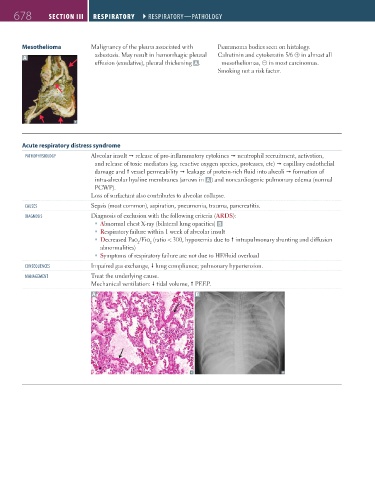
intra-alveolar hyaline membranes (arrows in A ) and noncardiogenic pulmonary edema (normal
PCWP).
Loss of surfactant also contributes to alveolar collapse.
CAUSES Sepsis (most common), aspiration, pneumonia, trauma, pancreatitis.
DIAgNOSIS Diagnosis of exclusion with the following criteria (ARDS):
Abnormal chest X-ray (bilateral lung opacities) B
Respiratory failure within 1 week of alveolar insult
Decreased Pao /Fio (ratio < 300, hypoxemia due to intrapulmonary shunting and diffusion
2
2
abnormalities)
Symptoms of respiratory failure are not due to HF/fluid overload
CONSEQUENCES Impaired gas exchange, lung compliance; pulmonary hypertension.
mANAgEmENT Treat the underlying cause.
Mechanical ventilation: tidal volume, PEEP.
A B
FAS1_2019_16-Respiratory.indd 678 11/8/19 7:34 AM

