


Page 723 - First Aid for the USMLE Step 1 2020, Thirtieth edition [MedicalBooksVN.com]_Neat
P. 723
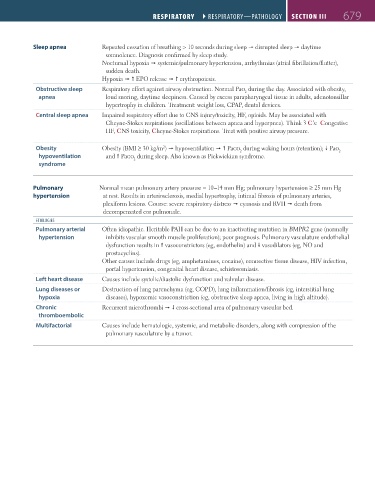
RespiRatoRy ` RESPIRATORY—PAThOlOgY RespiRatoRy ` RESPIRATORY—PAThOlOgY seCtioN iii 679
Sleep apnea Repeated cessation of breathing > 10 seconds during sleep disrupted sleep daytime
somnolence. Diagnosis confirmed by sleep study.
Nocturnal hypoxia systemic/pulmonary hypertension, arrhythmias (atrial fibrillation/flutter),
sudden death.
Hypoxia EPO release erythropoiesis.
Obstructive sleep Respiratory effort against airway obstruction. Normal Pao during the day. Associated with obesity,
2
apnea loud snoring, daytime sleepiness. Caused by excess parapharyngeal tissue in adults, adenotonsillar
hypertrophy in children. Treatment: weight loss, CPAP, dental devices.
Central sleep apnea Impaired respiratory effort due to CNS injury/toxicity, HF, opioids. May be associated with
Cheyne-Stokes respirations (oscillations between apnea and hyperpnea). Think 3 C’s: Congestive
HF, CNS toxicity, Cheyne-Stokes respirations. Treat with positive airway pressure.
Obesity Obesity (BMI ≥ 30 kg/m ) hypoventilation Paco during waking hours (retention); Pao
2
2
2
hypoventilation and Paco during sleep. Also known as Pickwickian syndrome.
2
syndrome
Pulmonary Normal mean pulmonary artery pressure = 10–14 mm Hg; pulmonary hypertension ≥ 25 mm Hg
hypertension at rest. Results in arteriosclerosis, medial hypertrophy, intimal fibrosis of pulmonary arteries,
plexiform lesions. Course: severe respiratory distress cyanosis and RVH death from
decompensated cor pulmonale.
ETIOlOgIES
Pulmonary arterial Often idiopathic. Heritable PAH can be due to an inactivating mutation in BMPR2 gene (normally
hypertension inhibits vascular smooth muscle proliferation); poor prognosis. Pulmonary vasculature endothelial
dysfunction results in vasoconstrictors (eg, endothelin) and vasodilators (eg, NO and
prostacyclins).
Other causes include drugs (eg, amphetamines, cocaine), connective tissue disease, HIV infection,
portal hypertension, congenital heart disease, schistosomiasis.
Left heart disease Causes include systolic/diastolic dysfunction and valvular disease.
Lung diseases or Destruction of lung parenchyma (eg, COPD), lung inflammation/fibrosis (eg, interstitial lung
hypoxia diseases), hypoxemic vasoconstriction (eg, obstructive sleep apnea, living in high altitude).
Chronic Recurrent microthrombi cross-sectional area of pulmonary vascular bed.
thromboembolic
Multifactorial Causes include hematologic, systemic, and metabolic disorders, along with compression of the
pulmonary vasculature by a tumor.
FAS1_2019_16-Respiratory.indd 679 11/8/19 7:34 AM

