


Page 148 - APPLIED PROCESS DESIGN FOR CHEMICAL AND PETROCHEMICAL PLANTS, Volume 1, 3rd Edition
P. 148
132                      Applied Process Design for Chemical  and Petrochemical  Plants

                                                                             ABSOLtrrE  VISCOSITI'  X  ICY·  POUNDS  PER  l'OOT-SECOND

                     5.00
                     4.00                                               I\
                     3.00
                                                                         '  \
                     2.00
                                                                           '
                           �        I  12  AND  18  INCH  PfPE  I           I\
                     1.00
                     8:'8
                     0.60                                                      \
                     0.50        '
                     0.40                                                        r-..
                                 '  ...                                           \
                                 '-   '\.   6  AND  I INCH  PIPE  � -              I\  \
                                  "   '                                               \
                                   1,
                     0.10             "�                                                r\
                     0.01                -
                     0.07                                                                '
                     0.06
                     0.05                                                                  \
                     0.04                                                                    \.
                     0.03
                                                                                               :\.
                                                                                                "  '
                     0.02
                                                                                                  '\
                     o.o  I                                                                         '\
                                               .
                         40  5060  80100   200  300   500   1000   2000
                                               D,,p                                                   I'\.
                                 REYNOLDS  NUMBER  Ro  = -                                                    0
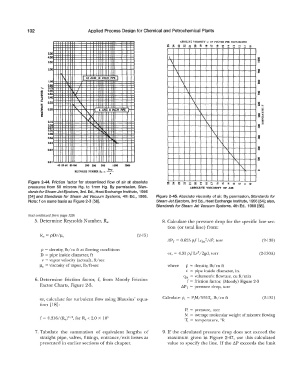
             Figure  2-44.  Friction  factor for streamlined  flow  of air at absolute
             pressures  from  50  microns  Hg.  to  1 mm  Hg.  By  permission,  Stan-   ABSOurrE  VISCOSITY  OF  AIR
             dards for Steam Jet  Ejectors,  3rd. Ed., Heat Exchange Institute, 1956
             [54]  and Standards  for Steam  Jet Vacuum  Systems,  4th  Ed.,  1988.   Figure 2-45. Absolute viscosity of air.  By permission,  Standards for
             Note: f on same basis as Figure 2-3 [58].             Steam Jet Ejectors,  3rd Ed., Heat Exchange Institute, 1956 (54]; also,
                                                                   Standards  for Steam Jet Vacuum Systems,  4th  Ed., 1988 [58].
             (text continued from page 129)
                5.  Determine Reynolds Number,  R,,.                 8.  Calculate the pressure drop for the specific line sec-
                                                                        tion  ( or total line)  from:
                                                           (2-15)
                                                                                                               (2-130)

                   p  =  density,  lb/ cu ft  at flowing conditions
                                                                                    2
                  D  =  pipe inside diameter,  ft                       or,  =  4.31  p.f Lv /2gd,  Lorr      (2-l 30A)
                   v  = vapor velocity  (actual), ft/sec
                  µ 0  = viscosity of  vapor,  lb/ft-sec                where   p  =  density,  lb/cu ft
                                                                               d  =  pipe inside diameter, in.
                                                                              qm  =  volumetric flowrate,  cu ft/min
                6.  Determine  friction  factor,  f,  from  Moody  Friction     f = friction factor,  (Moody)  Figure  2-3
                  Factor Charts,  Figure 2-3.                                .1.PT  = pressure drop,  torr


                  or,  calculate for turbulent flow using Blausius' equa-   Calculate:  P;  =  P;M/555Ti,  lb/cu ft   (2-131)
                  tion  [18]:
                                                                               P;  =  pressure,  torr
                                                                               M  =  average molecular weight of mixture flowing
                              1
                  f = 0.316/  (R,,)  11, for R,, < 2.0  X  10 5
                                                                               T;  =  temperature,  R
                                                                                              0
                7.  Tabulate  the  summation  of  equivalent  lengths  of   9.  If the calculated pressure drop does not exceed the
                  straight pipe,  valves,  fittings,  entrance/exit losses  as   maximum  given  in  Figure  2-47,  use  this  calculated
                  presented in earlier sections of this  chapter.       value  to  specify the line.  If the �p exceeds the limit

