


Page 152 - APPLIED PROCESS DESIGN FOR CHEMICAL AND PETROCHEMICAL PLANTS, Volume 1, 3rd Edition
P. 152
136                       Applied  Process Design for Chemical and  Petrochemical  Plants
                                                Particle  diameter
                                                  (largest 5%)
                                            Tyler
                                            mesh    Inches   Microns
                                                                                    (Yelocitv  = 4 to 7 ft/s I
                                                            10000
                                                             8000
                                                    .250
                                                             6000
                                              4     .185
                                                             4000


                                              B     .093           \.
                                                                    \
                                                             2000


                                             14     .046                         HETEROGENEOUS
                                                             1000        ...
                                                              BOO         '
                                                                           '
                                              28    .023      600           '  ..
                                                                              �
                                                                 - -�           ......   Based on thick slurries
                                                                   '\
                                                                                  --=-
                                                                 ,_  -�            "'-..
                                                                                        with fine  (-325  mesh) vehicle
                                                                     �
                                                                      �
                                             43     .012      400       ,.  ..
                                                                       "                ""  '-...
                                                              200        �  �-  �  ,.,             -........... ..........
                                             100     .006                          COMPOUND                      -
                                                                              '•            I
                                                                                �  ••  ,..._  Based on thin slurries or slurries
                                                                                   ••••  .....  with graded particle size
                                                              100                      ..... _
                                                               80                           -·····  .........  ,  ••
                                             200     .003
                                                               60

                                            325     .0017
                                                               40


                                                                                 HOMOGENEOUS
                                                               20
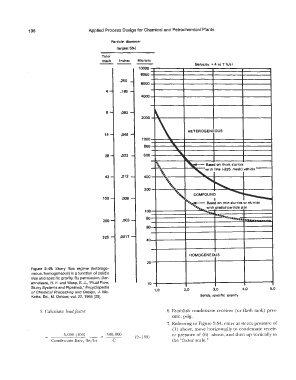
              Figure  2-49.  Slurry  flow  regime  (heteroge-
              neous, homogeneous) is a function of solid's
              size and specific gravity.  By permission, Der-
              annelaere, R.H. and Wasp, E. J., "Fluid Flow,     10
              Slurry Systems and Pipelines," Encyclopedia                      2.0         3.0          4.0        5.0
              of Chemical Processing and Design,  J.  Mc-         1.0
              Ketta,  Ed.,  M.  Dekker,  vol. 22, 1985 [25].                          Solids,  specific  gravity

                  5.  Calculate  load factor.                           6.  Establish  condensate  receiver  ( or flash  tank)  pres-
                                                                          sure, psig.
                                                                        7.  Referring to Figure 2-54,  enter at steam pressure of
                                                                          (1)  above,  move  horizontally  to  condensate receiv-
                            5,000  (100)      500,000     (2-133)         er pressme of (6)  above, and then up vertically to
                       Condensate Rate,  lbs/hr   c                       the "factor scale."

