


Page 151 - APPLIED PROCESS DESIGN FOR CHEMICAL AND PETROCHEMICAL PLANTS, Volume 1, 3rd Edition
P. 151
Fluid Flow                                           135

                                                                Example  2-18: Calculation of Steam Condensate
                                                                Flashing
                                                                   There are 79,500 lbs/hr of 450 psig condensate flowing
           �
           ...                                                  into a flash  tank.  The  tank is  to  be  held at 250  psig,  gen-
           "'
           z
           0                                                    erating steam at this  pressure.  Determine  the quantity  of
           ...                                                  steam produced  .
           �
           "'
            ...
           0
                                                                   Enthalpy of liquid at 150 psig = 441. l  Btu/lb
                                                                   Enthalpy of liquid at 250 psig  =  381.6 Btu/lb
                                                                   Latent heat of vaporization at 250  psig  =  820.1  Btu/lb
                                    Vo·  Typicol dtpostion criticol vttocity
                                    Vy· Typicol viau1 tnniitian critiul vllocity     44    381 6
                                                                   %  flash into steam  =   1.1  -   ·  (100)  =  7.25%
                                                                                        R20.1
                                   LOG  V                          Steam formed =  (0.0725)  (79,500)  =  5,763 lbs/hr
                                                                   Condensate formed==  79,500 - 5,763  =  73,737 lbs/hr
              HETEROGENEOUSSLURRY(A)     HOMOGENEOUS SLURRY (Bl
                                                                Sizing Condensate Return Lines
                               FULL SUSPENSION
                                                                   Steam  condensate  lines  usually  present  a  two-phase
                                                                flow  condition,  with  hot  condensate  flowing  to  a  lower
                                                                pressure  through  short and  long  lines.  As  the  flow  pro-
                  FULL MOVEMENT            FULL TURBULENCE
                                                                gresses  down  the  pipe,  the  pressure  falls  and  flashing of
                                                                condensate into steam takes place continuously.  For small
                             AT CRITICAL VELOCITY               lengths with low pressure drops, and the outlet end being
                                                      -<l
           µfiit¥'t\¥i#H41\lW                      -·�  .. ,;:   within a few pounds per square inch of the inlet,  the flash
                                                                will  be  such  a  small  percent  that  the  line  can  often  be
                 BED BUILDING  -  Vo       LAMINAR FLOW - Vy    sized as an all liquid line.  However,  caution must be exer-
                                                                cised  as  even  5%  flashing  can  develop  an  important
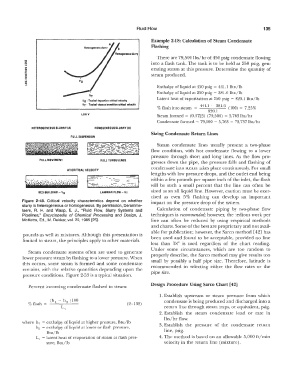
          Figure  2-48.  Critical  velocity  characteristics  depend  on  whether   impact on the pressure drop of the system.
          slurry is heterogeneous or homogeneous.  By permission, Deramme-
          laere,  R.  H.  and  Wasp,  E.  J.,  "Fluid  Flow,  Slurry  Systems  and   Calculation  of  condensate  piping  by  two-phase  flow
          Pipelines,"  Encyclopedia  of Chemical  Processing  and  Design,  J.   techniques is  recommended;  however,  the tedious work per
          McKetta,  Ed.,  M.  Dekker, vol.  22,  1985  [25].    line  can  often  be  reduced  by  using  empirical  methods
                                                                and charts. Some of the best are proprietary and not avail-
                                                                able for publication;  however,  the Sarco method  [ 42]  has
           pounds as well as mixtures.  Although this  presentation is   been  used  and found  to  be  acceptable,  provided no line
           limited to steam,  the principles apply to other materials.
                                                                less  than  lW  is  used  regardless  of  the  chart  reading.
                                                                Under  some  circumstances,  which  are  too  random  to
             Steam  condensate  systems  often  are  used  to  generate
           lower pressure steam by flashing to a lower pressure. When   properly describe,  the Sarco method  may give  results  too
                                                                small  by  possibly  a  half pipe  size.  Therefore,  latitude  is
           this  occurs,  some  steam  is  formed  and  some  condensate   recommended  in  selecting  either  the  flow  rates  or  the
           remains,  with  the  relative  quantities depending upon  the   pipe size.
           pressure conditions.  Figure 2-53 is a typical  situation.

                                                                Design Procedure Using Sarco Chart [42]
             Percent incoming condensate flashed to steam:
                                                                    1. Establish  upstream  or  steam  pressure  from  which
                        1
                      (h -h )100                                      condensate is being produced and discharged into a
                            2
             %  flash  =                              (2-132)
                           L                                          return line through steam traps,  or equivalent,  psig.
                                                                    2.  Establish  the  steam  condensate  load  or  rate  in
                                                                      lbs/hr flow.
          where  h  1  =  enthalpy  of liquid at higher pressure, Btu/lb
                h2  =  enthalpy of liquid at lower or flash pressure,   3.  Establish  the  pressure  of  the  condensate  return
                     Btu/lb                                           line,  psig.
                L,.  =  latent heal of evaporation of steam at flash pres-   4.  The method is based on an allowable 5,000 ft/min
                     sure,  Btu/lb                                    velocity in the return line (mixture).

