


Page 460 - APPLIED PROCESS DESIGN FOR CHEMICAL AND PETROCHEMICAL PLANTS, Volume 1, 3rd Edition
P. 460
426                      Applied Process Design for Chemical  and Petrochemical Plants

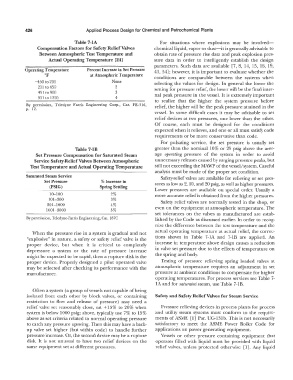
                                Table 7-IA                          For  situations  where  explosions  may  be  involved-
                 Compensation Factors for Safety Relief Valves    chemical liquid, vapor or dust-it is generally advisable to
                 Between Atmospheric Test Temperature and         obtain rate of pressure rise data and peak explosion pres-
                     Actual Operating Temperature  [24]           sure  data  in  order  to  intelligently  establish  the  design
                                                                  parameters.  Such data are  available  [7,  8,  14,  15,  16,  19,
            Operating Temperature    Percent Increase in Set Pressure   41, 54];  however,  it is  important to  evaluate whether the
                    OF                 at Atmospheric Temperature   conditions  are  comparable  between  the  systems  when
                -450 to 200                     None              selecting  the values  for design.  In general  the lower the
                 201  to 450                     2                setting for pressure relief,  the lower will be the final inter-
                 451  to 900                     3                nal  peak pressure in the vessel.  It is extremely important
                 901  to  1200                   4
                                                                  to  realize  that  the  higher  the  system  pressure  before
            By  permission,  Teledyne  Farris  Engineering  Corp.,  Cat.  FE-316,   relief,  the higher will be the peak pressure attained in the
            p.  12.
                                                                  vessel.  In  some  difficult cases  it may  be  advisable  to  set
                                                                  relief devices  at two  pressures,  one  lower than  the other.
                                                                  Of  course,  each  must  be  designed  for  the  conditions
                                                                  expected when it relieves, and one or all must satisfy code
                                                                  requirements or be more conservative than code.
                                                                    For  pulsating  service,  the  set  pressure  is  usually  set
                                Table 7-lB                        greater than  the nominal  10%  or 25  psig above  the aver-
                Set Pressure Compensation for Saturated Steam     age  operating  pressure  of  the  system  in  order  to  avoid
               Service Safety-Relief  Valves Between Atmospheric   unnecessary releases caused by surging pressure peaks, but
              Test Temperature and Actual Operating Temperature   still not exceeding the MAv\lP of the vessel/  system. Careful
                                                                  analysis must be made of the proper set condition.
            Saturated Steam Service                                 Safety-relief valves  are  available for relieving or set pres-
                    Set Pressure           % Increase in          sures as low as 2, 10, and 20 psig, as well as higher pressures.
                      (PSIG)               Spring Settling
                                                                  Lower  pressures  are  available  on  special  order.  Usually  a
                      10-100                   2%                 more accurate relief is obtained from the higher pressures.
                     101-300                   3%                   Safety relief valves  are  normally  tested in the  shop,  or
                     301-1000                  4%
                    1001-3000                  5%                 even on the equipment at atmospheric temperature. The
                                                                  set  tolerances  on  the  valves  as  manufactured  are  estab-
            By permission, Teledyne-Farris Engineering,  Cat.  187C   lished by  the Code as discussed earlier.  In order to recog-
                                                                  nize the difference between the test temperature and the
              When the  pressure  rise in a system is gradual  and not   actual operating  temperature at actual  relief,  the correc-
            "explosive"  in  nature,  a  safety  or safety relief valve  is  the   tions  shown  in  Table  7-lA  and  7-lB  are  applied.  An
            proper  device,  but  when  it  is  critical  to  completely   increase in temperature  above design  causes  a reduction
            depressure  a  system  or  the  rate  of  pressure  increase   in valve set pressure  due to  the effects  of temperature on
            might be expected to be rapid, then a rupture disk is the   the spring and body.
            proper device.  Properly  designed  a  pilot operated valve   Testing  of  pressure  relieving  spring  loaded  valves  al
            may be selected after checking its  performance with  the   atmospheric  temperature  requires  an  adjustment in  set
            manufacturer.                                         pressure at ambient conditions to compensate for higher
                                                                  operating temperatures.  For process  services see Table 7-
                                                                  lA and for saturated steam, use Table 7-1 B.
               Often a system  (a group of  vessels not capable of  being
            isolated  from  each  other  by  block  valves,  or  containing   Safety and Safety Relief Valves for Steam Service
            restriction  to  flow  and  release  of pressure)  may  need  a
            relief valve  set reasonably  close,  sat + 15%  to  20%  when   Pressure relieving devices in process  plants for process
            system is  below  1000  psig;  above,  typically use 7%  to  15%   and  utility  steam  systems  must conform  to  the  require-
            above as set criteria related to normal operating pressure   ments of ASME  [l]  Par.  UG-131b.  This is not necessarily
            to catch any pressure upswing. Then this may have a back-   satisfactory  to  meet  the  ASME  Power  Boiler  Code  for
            up  valve  set higher  (but within  code)  to  handle further   applications on power generating equipment.
            pressure increase. Or,  the second device may be a rupture   Vessels  or  other  pressure  containing  equipment  that
            disk.  It is  not unusual  to  have  two  relief devices  on  the   operates  filled with  liquid  must be  provided  with  liquid
            same equipment set at different pressures.            relief valves,  unless  protected  otherwise  [l].  Any  liquid

