


Page 469 - APPLIED PROCESS DESIGN FOR CHEMICAL AND PETROCHEMICAL PLANTS, Volume 1, 3rd Edition
P. 469
Process Safety and  Pressure-Relieving Devices                      435

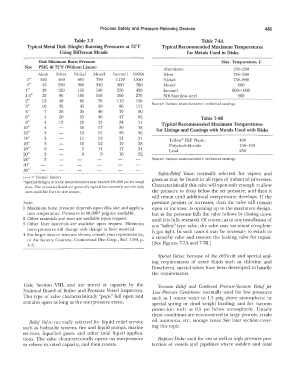
                                Table 7-3                                            Table 7-4A
            Typical Metal Disk (Single) Bursting Pressures at 72°F   Typical Recommended Maximum Temperatures
                          Using Different Metals                               for Metals Used in Disks

                 Disk Minimum Burst Pressure                                                 Max. Temperature, F
           Size   PSIG@ 72°F (Without Liners)
                                                                     Aluminum                     250-260
                 Alum    Silver   Nickel   Mon  el   In  cone  I   316SS   Silver                 250-260
            X"    160    450     600     700      1120   1550        Nickel                       750-800
            � II   65    220     300     350      560     760        Mone  I                        800
            I"     29    120      150    180      250     420        Inconel                      900-1000
            1-w·   22     80      iOO    116      160     275        316 Stainless steel            900
            2"     13     48      60      70      110     150
            3"     10     35      45      50       80     117    Source: Various manufacturers' technical  catalogs.
            4"      7     26      35      40       70      90
            6"      5     20      25      30       47      62                        Table 7-48
            8"      4     15      20      23       34      51       Typical Recommended Maximum Temperatures
           10"      4              16     17       30      43     for Linings and Coatings with Metals Used with Disks
           12"      3              13     15       25      36
           14"      3              ]]     13       21      31           Teflon® FEP Plastic          400
           16"      3              10     12       19      28           Polyvinylchloride            150-180
           18"      3              9      11       17      24           Lead                         250
           20"      3              8       9       16      22
           24"      3                                           Source: Various manufacturers'  technical catalogs.
           30"
           36"
                                                                   Safety-Relief  Valve:  normally  selected  for  vapors  and
           (-)  =  Consult factory                               gases as  may be found in all  types  of industrial  processes.
           �special designs of  some manufacturers may exceed]  50,000 psi for small   Characteristically this valve will open only enough to allow
           sizes. The pressures listed are generally typical but certainly not the only
           ones available  for the size shown.                   the  pressure  to  drop below  the  set pressure,  and  then  it
                                                                will  reseat until  additional  overpressure  develops.  If the
           Note:                                                 pressure  persists  or increases,  then  the valve will  remain
           1. Maximum burst pressure depends upon disk size and applica-   open  or increase its opening up to the maximum design,
             tion  temperature.  Pressures to 80,000*  psig are available.   but as  the  pressure falls the valve follows  by  closing down
           2.  Other materials and sizes are available upon  request.   until it is folly reseated.  Of  course, as in any installation of
           3. Other  liner  materials  are  available  upon  request.  Minimum   any  "safety"  type valve,  the valve  may  not reseat complete-
             burst pressures will change with  change  in  liner material.   ly gas  tight.  In such cases it may  be  necessary  to switch  to
           4.  For larger sizes or sizes not shown, consult your representative,
             or the factory.  Courtesy,  Continental Disc  Corp.,  Bui.  1184,  p.   a  stand-by  valve  and  remove  the  leaking  valve  for repair.
             4-5.                                                [See Figures  7-7A and 7-7B.J

                                                                   Special  Valves:  because  of the difficult and special  seal-
                                                                 ing  requirements  of some  fluids  such  as  chlorine  and
                                                                 Dowtherrn,  special valves have been  developed  to handle
                                                                 the requirements.

           Code,  Section  VIII,  and  are  tested  at  capacity  by  the   Vacuum  Relief and  Combined  Pressure-Vacuum  Relief  for
           National  Board  of Boiler and Pressure Vessel  Inspectors.   Low  Pressure  Conditions:  normally  used  for  low  pressures
           This  type  of valve  characteristically  "pops"  full  open and   such as  1  ounce  water  to  1.5  psig  above  atmospheric  by
           remains open  as  long as  the overpressure exists.   special  spring  or  dead  weight  loading;  and  for vacuum
                                                                 protection  such  as  0.5  psi  below  atmospheric.  Usually
                                                                 these conditions are encountered in large process,  crude
             Relief Valve:  normally  selected for liquid relief service   oil, ammonia,  etc.,  storage  tanks.  See later section  cover-
           such as  hydraulic  systems,  fire and  liquid pumps,  marine   ing this topic.
           services,  liquefied  gases,  and  other  total  liquid  applica-
           tions.  The  valve  characteristically opens  on overpressure   Rupture Disks:  used for low as well as high pressure pro-
           to relieve its  rated capacity,  and then reseats.    tection  of vessels  and  pipelines  where  sudden  and  total

