


Page 514 - APPLIED PROCESS DESIGN FOR CHEMICAL AND PETROCHEMICAL PLANTS, Volume 1, 3rd Edition
P. 514
480                      Applied Process Design for Chemical and Petrochemical  Plants

             SIDE VIEW


                                  I I

                                          t---����������-K����������---i
                                  �---��������������·C���������������•-i


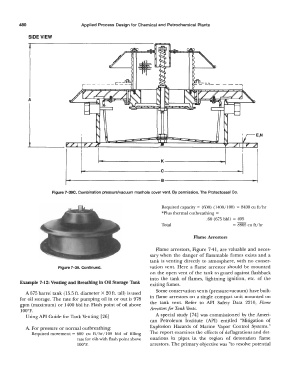
                       Figure 7-39C. Combination pressure/vacuum manhole cover vent.  By permission, The Protectoseal Co.

                                                                    Required capacity= (600)  (1400/100)  =  8400 cu ft/hr
                                                                    *Plus thermal outbreathing  =
                                                                                      .60  (675 bbl)  =  105
                                                                   Total                         =  8805 cu ft/hr

                                                                                 Flame Arrestors

                                                                 Flame  arrestors,  Figure  7-41, are valuable  and neces-
                                                               sary when  the  danger of flammable  fumes  exists  and  a
                                                               tank  is  venting  directly  to  atmosphere,  with  no  conser-
                         Figure 7-39. Continued.               vation  vent.  Here  a  flame  arrestor should  be  mounted
                                                               on the open vent of the  tank to guard against flashback
                                                               into  the  tank  of flames,  lightning  ignition,  etc.  of the
         Example 7-12: Venting and Breathing in Oil Storage Tank   exiting fumes.
                                                                 Some conservation vents  (pressure-vacuum)  have built-
            A 675 barrel tank (15.5 ft. diameter X  20 ft.  tall)  is used
         for oil storage.  The  rate  for pumping oil  in or out is  978   in flame  arrestors  on  a  single compact unit mounted on
         gpm  (maximum) or 1400 bbl  hr.  Flash  point of oil  above   the  tank  vent.  Refer  to  API  Safety  Data  2210,  Flame
         I00°F.                                                Arrestors for Tank Vents.
            Using API Guide for Tank Venting  [26]               A  special  study  [74]  was  commissioned  by  the Ameri-
                                                               can  Petroleum  Institute  (API)  entitled  "Mitigation  of
            A.  For pressure or normal outbreathing:           Explosion  Hazards  of  Marine  Vapor  Control  Systems."
              Required movement= 600  cu  ft/hr/100  bbl  of  filling   The  report examines the effects of deflagrations and det-
                                 rate for oils with flash point above   onations  in  pipes  in  the  region  of  detonation  flame
                                 l00°F.                        arrestors. The primary objective was "to resolve potential

