


Page 426 - Python Data Science Handbook
P. 426
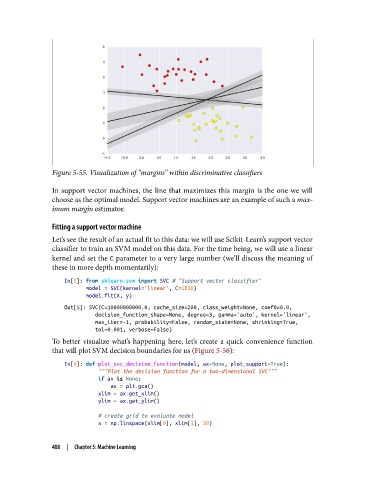
Figure 5-55. Visualization of “margins” within discriminative classifiers

               In support vector machines, the line that maximizes this margin is the one we will
               choose as the optimal model. Support vector machines are an example of such a max‐
               imum margin estimator.

               Fitting a support vector machine
               Let’s see the result of an actual fit to this data: we will use Scikit-Learn’s support vector
               classifier to train an SVM model on this data. For the time being, we will use a linear
               kernel and set the C parameter to a very large number (we’ll discuss the meaning of
               these in more depth momentarily):

                   In[5]: from sklearn.svm import SVC # "Support vector classifier"
                          model = SVC(kernel='linear', C=1E10)
                          model.fit(X, y)
                   Out[5]: SVC(C=10000000000.0, cache_size=200, class_weight=None, coef0=0.0,
                             decision_function_shape=None, degree=3, gamma='auto', kernel='linear',
                             max_iter=-1, probability=False, random_state=None, shrinking=True,
                             tol=0.001, verbose=False)
               To better visualize what’s happening here, let’s create a quick convenience function
               that will plot SVM decision boundaries for us (Figure 5-56):
                   In[6]: def plot_svc_decision_function(model, ax=None, plot_support=True):
                              """Plot the decision function for a two-dimensional SVC"""
                              if ax is None:
                                  ax = plt.gca()
                              xlim = ax.get_xlim()
                              ylim = ax.get_ylim()

                              # create grid to evaluate model
                              x = np.linspace(xlim[0], xlim[1], 30)


               408  |  Chapter 5: Machine Learning

