


Page 479 - Python Data Science Handbook
P. 479
In[24]:
                   # use only 1/30 of the data: full dataset takes a long time!
                   data = mnist.data[::30]
                   target = mnist.target[::30]
                   model = Isomap(n_components=2)
                   proj = model.fit_transform(data)
                   plt.scatter(proj[:, 0], proj[:, 1], c=target, cmap=plt.cm.get_cmap('jet', 10))
                   plt.colorbar(ticks=range(10))
                   plt.clim(-0.5, 9.5);


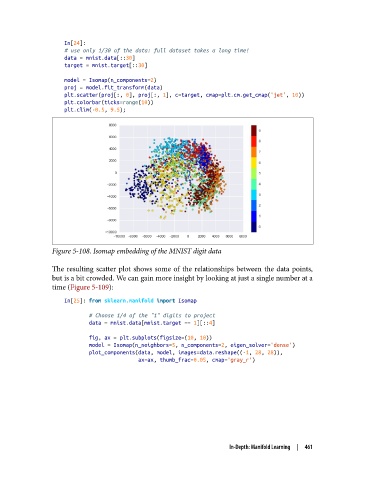
               Figure 5-108. Isomap embedding of the MNIST digit data

               The resulting scatter plot shows some of the relationships between the data points,
               but is a bit crowded. We can gain more insight by looking at just a single number at a
               time (Figure 5-109):
                   In[25]: from sklearn.manifold import Isomap

                           # Choose 1/4 of the "1" digits to project
                           data = mnist.data[mnist.target == 1][::4]

                           fig, ax = plt.subplots(figsize=(10, 10))
                           model = Isomap(n_neighbors=5, n_components=2, eigen_solver='dense')
                           plot_components(data, model, images=data.reshape((-1, 28, 28)),
                                           ax=ax, thumb_frac=0.05, cmap='gray_r')


                                                                In-Depth: Manifold Learning  |  461

