


Page 110 - Hall et al (2015) Principles of Critical Care-McGraw-Hill
P. 110
78      PART 1: An Overview of the Approach to and Organization of Critical Care


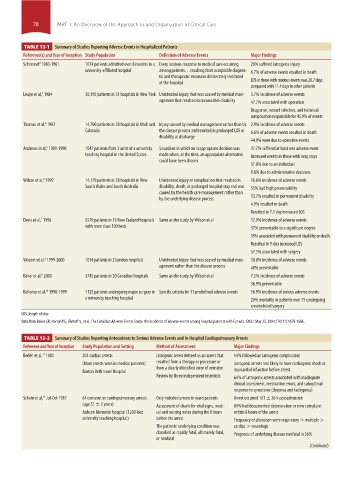
                   TABLE 12-1    Summary of Studies Reporting Adverse Events in Hospitalized Patients
                  Reference(s) and Year of Inception Study Population  Definition of Adverse Events  Major Findings
                  Schimmel  1960-1961  1014 patients admitted over 8 months to a  Every noxious response to medical care occurring   20% suffered iatrogenic injury
                       2
                                       university-affiliated hospital  among patients…resulting from acceptable diagnos-  6.7% of adverse events resulted in death
                                                                tic and therapeutic measures deliberately instituted
                                                                at the hospital                LOS in those with noxious events was 28.7 days
                                                                                               compared with 11.4 days in other patients
                        3
                  Leape et al,  1984   30,195 patients in 51 hospitals in New York Unintended injury that was caused by medical man-  3.7% incidence of adverse events
                                                                agement that resulted in measurable disability   47.7% associated with operation
                                                                                               Drug error, wound infection, and technical
                                                                                               complication responsible for 45.9% of events
                         4
                  Thomas et al,  1992  14,700 patients in 28 hospitals in Utah and  Injury caused by medical management rather than by  2.9% incidence of adverse events
                                       Colorado                 the disease process and resulted in prolonged LOS or   6.6% of adverse events resulted in death
                                                                disability at discharge
                                                                                               44.9% were due to operative events
                          5
                  Andrews et al,  1989-1990  1047 patients from 3 units of a university   Situations in which an inappropriate decision was   17.7% suffered at least one adverse event
                                       teaching hospital in the United States  made when, at the time, an appropriate alternative   Increased events in those with long stays
                                                                could have been chosen
                                                                                               37.8% due to an individual
                                                                                               9.8% due to administrative decisions
                  Wilson et al,  1992  14,179 patients in 28 hospitals in New   Unintended injury or complication that resulted in   16.6% incidence of adverse events
                         6
                                       South Wales and South Australia  disability, death, or prolonged hospital stay and was   51% had high preventability
                                                                caused by the health care management rather than
                                                                by the underlying disease process   13.7% resulted in permanent disability
                                                                                               4.9% resulted in death
                                                                                               Resulted in 7.1 day increased LOS
                        7
                  Davis et al,  1998   6579 patients in 13 New Zealand hospitals  Same as the study by Wilson et al  12.9% incidence of adverse events
                                       with more than 100 beds                                 37% preventable to a significant degree
                                                                                               15% associated with permanent disability or death
                                                                                               Resulted in 9-day increased LOS
                                                                                               57.5% associated with surgery
                         8
                  Vincent et al,  1999-2000  1014 patients in 2 London hospitals  Unintended injury that was caused by medical man-  10.8% incidence of adverse events
                                                                agement rather than the disease process  48% preventable
                  Baker et al,  2000   3745 patients in 20 Canadian hospitals   Same as the study by Wilson et al  7.5% incidence of adverse events
                        9
                                                                                               36.9% preventable
                         10
                  Bellomo et al,  1998-1999  1125 patients undergoing major surgery in  Specific criteria for 11 predefined adverse events   16.9% incidence of serious adverse events
                                       a university teaching hospital                          20% mortality in patients over 75 undergoing
                                                                                               unscheduled surgery
                 LOS, length of stay.
                 Data from Baker GR, Norton PG, Flintoft V, et al. The Canadian Adverse Events Study: the incidence of adverse events among hospital patients with Canada. CMAJ. May 25, 2004;170(11):1678-1686.


                   TABLE 12-2    Summary of Studies Reporting Antecedents to Serious Adverse Events and In-Hospital Cardiopulmonary Arrests
                  Reference and Year of Inception   Study Population and Setting  Method of Assessment  Major Findings
                  Bedell et al,  1981  203 cardiac arrests     Iatrogenic arrest defined as an arrest that   14% followed an iatrogenic complication
                        11
                                      (Most arrests were in medical patients)  resulted from a therapy or procedure or   Iatrogenic arrests less likely to have cardiogenic shock or
                                      Boston Beth Israel Hospital  from a clearly identified error of omission  myocardial infarction before arrest
                                                               Review by three independent internists  64% of iatrogenic arrests associated with inadequate
                                                                                          clinical assessment, medication errors, and suboptimal
                                                                                          response to symptoms (dyspnea and tachypnea)
                         15
                  Schein et al,  Jul-Oct 1987  64 consecutive cardiopulmonary arrests   Only included arrests in ward patients  Arrest occurred 161 ± 26 h postadmission
                                      (age 51 ± 2 years)       Assessment of charts for vital signs, medi-  84% had documented deterioration or new complaint
                                      Jackson Memorial hospital (1200-bed   cal and nursing notes during the 8 hours   within 8 hours of the arrest
                                      university teaching hospital)  before the arrest    Frequency of alteration were respiratory > multiple >
                                                               The patients’ underlying condition was   cardiac > neurologic
                                                               classified as rapidly fatal, ultimately fatal,   Prognosis of underlying disease nonfatal in 36%
                                                               or nonfatal
                                                                                                                   (Continued)


            Section01.indd   78                                                                                        1/22/2015   9:37:16 AM

