


Page 413 - Hall et al (2015) Principles of Critical Care-McGraw-Hill
P. 413
CHAPTER 36: Cardiac Arrhythmias, Pacing, Cardioversion, and Defibrillation in the Critical Care Setting  283


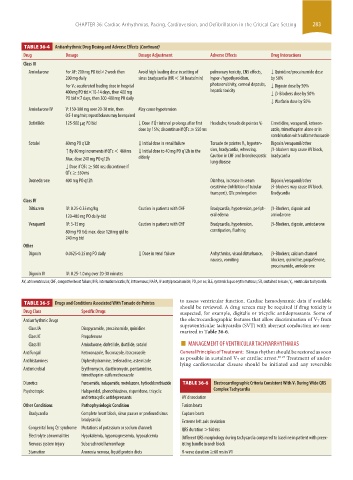
                      TABLE 36-4    Antiarrhythmic Drug Dosing and Adverse Effects (Continued)
                    Drug           Dosage                  Dosage Adjustment        Adverse Effects      Drug Interactions
                    Class III
                      Amiodarone   For AF: 200 mg PO tid×2 week then    Avoid high loading dose in setting of   pulmonary toxicity, CNS effects,   ↓ Quinidine/procainamide dose
                                   200 mg daily            sinus bradycardia (HR < 50 beats/min)  hyper-/hypothyroidism,    by 50%
                                   For V T: accelerated loading dose in hospital    photosensitivity, corneal deposits,   ↓ Digoxin dose by 50%
                                   400 mg PO tid×10-14 days, then 400 mg            hepatic toxicity     ↓ β-Blockers dose by 50%
                                   PO bid×7 days, then 300-400 mg PO daily
                                                                                                         ↓ Warfarin dose by 50%
                      Amiodarone IV  V: 150-300 mg over 20-30 min, then   May cause hypotension
                                   0.5-1 mg/min; repeat boluses may be required
                      Dofetilide   125-500 µg PO bid       ↓ Dose if Q ˙ t interval prolongs after first   Headache; torsade de pointes V T  Cimetidine, verapamil, ketocon-
                                                           dose by 15%; discontinue if QTc ≥ 550 ms      azole, trimethoprim alone or in
                                                                                                         combination with sulfamethoxazole
                      Sotalol      80 mg PO q12h           ↓ Initial dose in renal failure  Torsade de pointes V T, hypoten-  Digoxin/verapamil/other
                                   ↑ By 80 mg increments if QTc < 460 ms  ↓ Initial dose to 40 mg PO q12h in the   sion, bradycardia, wheezing.   β-blockers may cause AV block,
                                   Max. dose 240 mg PO q12h  elderly                Caution in CHF and bronchospastic  bradycardia
                                                                                    lung disease
                                   ↓ Dose if QTc ≥ 500 ms; discontinue if
                                   QTc ≥ 550 ms
                      Dronedarone  400 mg PO q12h                                   Diarrhea, increase in serum   Digoxin/verapamil/other
                                                                                    creatinine (inhibition of tubular   β-blockers may cause AV block.
                                                                                    transport), QTc prolongation  Bradycardia
                    Class IV
                      Diltiazem    IV: 0.25-0.35 mg/kg     Caution in patients with CHF  Bradycardia, hypotension, periph-  β-Blockers, digoxin and
                                   120-480 mg PO daily-bid                          eral edema           amiodarone
                      Verapamil    IV: 5-15 mg             Caution in patients with CHF  Bradycardia, hypotension,    β-Blockers, digoxin, amiodarone
                                   80 mg PO tid; max. dose 120 mg qid to            constipation, flushing
                                   240 mg bid
                    Other
                      Digoxin      0.0625-0.25 mg PO daily  ↓ Dose in renal failure  Arrhythmias, visual disturbance,   β-Blockers; calcium channel
                                                                                    nausea, vomiting     blockers, quinidine, propafenone,
                                                                                                         procainamide, amiodarone
                      Digoxin IV   IV: 0.25-1.0 mg over 20-30 minutes
                    AV, atrioventricular; CHF, congestive heart failure; INR, international ratio; IV, intravenous; NAPA, N-acetylprocainamide; PO, per os; SLE, systemic lupus erythematosus; SR, sustained release; V , ventricular tachycardia.
                                                                                                                T

                      TABLE 36-5    Drugs and Conditions Associated With Torsade de Pointes  to assess ventricular function. Cardiac hemodynamic data if available
                                                                          should be reviewed. A drug screen may be required if drug toxicity is
                    Drug Class          Specific Drugs                    suspected, for example, digitalis or tricyclic antidepressants. Some of
                    Antiarrhythmic Drugs                                  the electrocardiographic features that allow discrimination of V T from
                                                                          supraventricular tachycardia (SVT) with aberrant conduction are sum-
                      Class IA          Disopyramide, procainamide, quinidine
                                                                          marized in Table 36-6.
                      Class IC          Propafenone                           ■
                      Class III         Amiodarone, dofetilide, ibutilide, sotalol  MANAGEMENT OF VENTRICULAR TACHYARRHYTHMIAS
                    Antifungal          Ketoconazole, fluconazole, itraconazole  General Principles of Treatment:  Sinus rhythm should be restored as soon
                                                                          as possible in sustained V T or cardiac arrest. 25-27  Treatment of under-
                    Antihistamines      Diphenhydramine, terfenadine, astemizole
                                                                          lying cardiovascular disease should be initiated and any reversible
                    Antimicrobial       Erythromycin, clarithromycin, pentamidine,
                                        trimethoprim-sulfamethoxazole
                    Diuretics           Furosemide, indapamide, metolazone, hydrochlorothiazide    TABLE 36-6     Electrocardiographic Criteria Consistent With V T During Wide QRS
                    Psychotropic        Haloperidol, phenothiazines, risperidone, tricyclic    Complex Tachycardia
                                        and tetracyclic antidepressants   AV dissociation
                    Other Conditions    Pathophysiologic Condition        Fusion beats
                      Bradycardia       Complete heart block, sinus pauses or profound sinus   Capture beats
                                        bradycardia                       Extreme left axis deviation
                      Congenital long Q t syndrome Mutations of potassium or sodium channels  QRS duration >160 ms
                               ˙
                      Electrolyte abnormalities  Hypokalemia, hypomagnesemia, hypocalcemia  Different QRS morphology during tachycardia compared to baseline in patient with preex-
                      Nervous system injury  Subarachnoid hemorrhage      isting bundle branch block
                      Starvation        Anorexia nervosa, liquid protein diets  R-wave duration ≥60 ms in V1


            section03.indd   283                                                                                       1/23/2015   2:07:10 PM

