


Page 121 - The Netter Collection of Medical Illustrations - Integumentary System_ Volume 4 ( PDFDrive )
P. 121
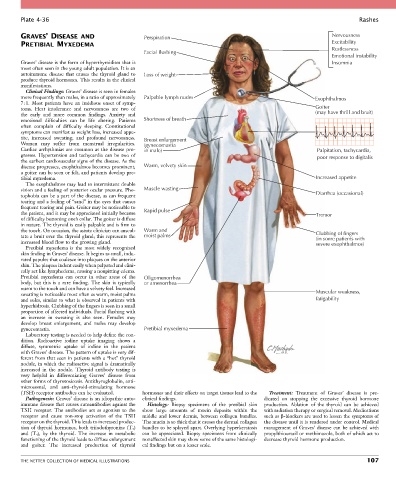
Plate 4-36                                                                                                           Rashes

        GRAVES’ DISEASE AND                        Perspiration                                                     Nervousness
        PRETIBIAL MYXEDEMA                                                                                          Excitability
                                                   Facial flushing                                                  Restlessness
                                                                                                                    Emotional instability
        Graves’ disease is the form of hyperthyroidism that is                                                      Insomnia
        most often seen in the young adult population. It is an
        autoimmune  disease  that  causes  the  thyroid  gland  to   Loss of weight
        produce thyroid hormones. This results in the clinical
        manifestations.
          Clinical Findings: Graves’ disease is seen in females
        more frequently than males, in a ratio of approximately   Palpable lymph nodes                        Exophthalmos
        7 : 1.  Most  patients  have  an  insidious  onset  of  symp-
        toms.  Heat  intolerance  and  nervousness  are  two  of                                              Goiter
        the  early  and  more  common  findings.  Anxiety  and                                                (may have thrill and bruit)
        emotional  difficulties  can  be  life  altering.  Patients     Shortness of breath
        often  complain  of  difficulty  sleeping.  Constitutional
        symptoms can manifest as weight loss, increased appe-
        tite,  increased  sweating,  and  profound  nervousness.   Breast enlargement
        Women  may  suffer  from  menstrual  irregularities.   (gynecomastia
        Cardiac  arrhythmias  are  common  as  the  disease  pro-  in male)                                   Palpitation, tachycardia,
        gresses.  Hypertension  and  tachycardia  can  be  two  of                                            poor response to digitalis
        the earliest cardiovascular signs of the disease. As the
        disease progresses, exophthalmos becomes prominent,   Warm, velvety skin
        a goiter can be seen or felt, and patients develop pre-
        tibial myxedema.                                                                                      Increased appetite
          The exophthalmos may lead to intermittent double
        vision and a feeling of posterior ocular pressure. Pho-  Muscle wasting
        tophobia can be a part of the disease, as can frequent                                                Diarrhea (occasional)
        tearing and a feeling of “sand” in the eyes that causes
        frequent tearing and pain. Goiter may be noticeable to
        the patient, and it may be appreciated initially because   Rapid pulse                                Tremor
        of difficulty buttoning one’s collar. The goiter is diffuse
        in nature. The thyroid is easily palpable and is firm to
        the touch. On occasion, the astute clinician can auscul-  Warm and                                    Clubbing of fingers
        tate a bruit over the thyroid gland; this represents the   moist palms                                (in some patients with
        increased blood flow to the growing gland.                                                            severe exophthalmos)
          Pretibial  myxedema  is  the  most  widely  recognized
        skin finding in Graves’ disease. It begins as small, indu-
        rated papules that coalesce into plaques on the anterior
        shin. The plaques indent easily when palpated and clini-
        cally act like lymphedema, causing a nonpitting edema.
        Pretibial  myxedema  can  occur  in  other  areas  of  the   Oligomenorrhea
        body,  but  this  is  a  rare  finding.  The  skin  is  typically   or amenorrhea
        warm to the touch and can have a velvety feel. Increased
        sweating is noticeable most often as warm, moist palms                                                Muscular weakness,
        and soles, similar to what is observed in patients with                                               fatigability
        hyperhidrosis. Clubbing of the fingers is seen in a small
        proportion of affected individuals. Facial flushing with
        an  increase  in  sweating  is  also  seen.  Females  may
        develop  breast  enlargement,  and  males  may  develop
        gynecomastia.                              Pretibial myxedema
          Laboratory testing is needed to help define the con-
        dition.  Radioactive  iodine  uptake  imaging  shows  a
        diffuse,  symmetric  uptake  of  iodine  in  the  patient
        with Graves’ disease. The pattern of uptake is very dif-
        ferent from that seen in patients with a “hot” thyroid
        nodule, in which the radioactive signal is dramatically
        increased  in  the  nodule.  Thyroid  antibody  testing  is
        very  helpful  in  differentiating  Graves’  disease  from
        other forms of thyrotoxicosis. Antithyroglobulin, anti-
        microsomal,  and  anti–thyroid-stimulating  hormone
        (TSH) receptor antibodies can be evaluated.  hormones and their effects on target tissues lead to the   Treatment:  Treatment  of  Graves’  disease  is  pre-
          Pathogenesis: Graves’ disease is an idiopathic auto-  clinical findings.          dicated  on  stopping  the  excessive  thyroid  hormone
        immune disease that causes autoantibodies against the   Histology:  Biopsy  specimens  of  the  pretibial  skin   production.  Ablation  of  the  thyroid  can  be  achieved
        TSH  receptor.  The  antibodies  act  as  agonists  to  the   show  large  amounts  of  mucin  deposits  within  the   with radiation therapy or surgical removal. Medications
        receptor  and  cause  non-stop  activation  of  the  TSH   middle  and  lower  dermis,  between  collagen  bundles.   such as β-blockers are used to lessen the symptoms of
        receptor on the thyroid. This leads to increased produc-  The mucin is so thick that it causes the dermal collagen   the disease until it is rendered under control. Medical
        tion of thyroid hormones, both triiodothyronine (T 3)   bundles to be splayed apart. Overlying hyperkeratosis   management  of  Graves’  disease  can  be  achieved  with
        and  (T 4),  by  the  thyroid.  The  increase  in  metabolic   can  be  appreciated.  Biopsy  specimens  from  clinically   propylthiouracil or methimazole, both of which act to
        functioning of the thyroid leads to diffuse enlargement   nonaffected skin may show some of the same histologi-  decrease thyroid hormone production.
        and  goiter.  The  increased  production  of  thyroid   cal findings but on a lesser scale.


        THE NETTER COLLECTION OF MEDICAL ILLUSTRATIONS                                                                          107

