


Page 118 - The Netter Collection of Medical Illustrations - Integumentary System_ Volume 4 ( PDFDrive )
P. 118
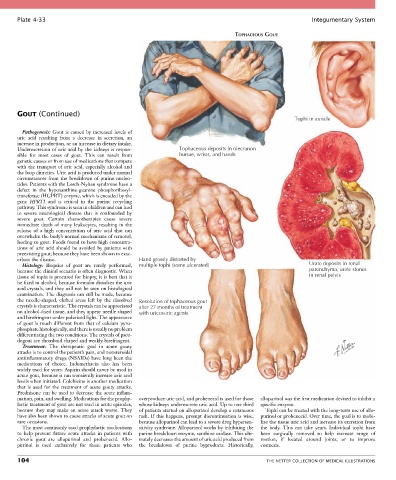
Plate 4-33                                                                                            Integumentary System

                                                                                  TOPHACEOUS GOUT


       GOUT (Continued)
                                                                                                       Tophi in auricle

         Pathogenesis: Gout is caused by increased levels of
       uric  acid  resulting  from  a  decrease  in  secretion,  an
       increase in production, or an increase in dietary intake.
       Underexcretion of uric acid by the kidneys is respon-   Tophaceous deposits in olecranon
       sible  for  most  cases  of  gout.  This  can  result  from   bursae, wrists, and hands
       genetic causes or from use of medications that compete
       with the transport of uric acid, especially alcohol and
       the loop diuretics. Uric acid is produced under normal
       circumstances  from  the  breakdown  of  purine  nucleo-
       tides. Patients with the Lesch-Nyhan syndrome have a
       defect  in  the  hypoxanthine-guanine  phosphoribosyl-
       transferase (HGPRT) enzyme, which is encoded by the
       gene  HPRT1  and  is  critical  in  the  purine  recycling
       pathway. This syndrome is seen in children and can lead
       to  severe  neurological  disease  that  is  confounded  by
       severe  gout.  Certain  chemotherapies  cause  severe
       immediate death of many leukocytes, resulting in the
       release  of  a  high  concentration  of  uric  acid  that  can
       overwhelm the body’s normal mechanisms of removal,
       leading to gout. Foods found to have high concentra-
       tions  of  uric  acid  should  be  avoided  by  patients  with
       preexisting gout, because they have been shown to exac-
       erbate the disease.                       Hand grossly distorted by
         Histology:  Biopsies  of  gout  are  rarely  performed,   multiple tophi (some ulcerated)          Urate deposits in renal
       because the clinical scenario is often diagnostic. When                                              parenchyma, urate stones
       tissue of tophi is procured for biopsy, it is best that it                                           in renal pelvis
       be fixed in alcohol, because formalin dissolves the uric
       acid crystals, and they will not be seen on histological
       examination. The diagnosis can still be made, because
       the  needle-shaped,  clefted  areas  left  by  the  dissolved   Resolution of tophaceous gout
       crystals is characteristic. The crystals can be appreciated   after 27 months of treatment
       on alcohol-fixed tissue, and they appear needle shaped   with uricosuric agents
       and birefringent under polarized light. The appearance
       of gout is much different from that of calcium pyro-
       phosphate histologically, and there is usually no problem
       differentiating the two conditions. The crystals of pseu-
       dogout are rhomboid shaped and weakly birefringent.
         Treatment:  The  therapeutic  goal  in  acute  gouty
       attacks is to control the patient’s pain, and nonsteroidal
       antiinflammatory drugs (NSAIDs) have long been the
       medications  of  choice.  Indomethacin  also  has  been
       widely used for years. Aspirin should never be used in
       acute gout, because it can transiently increase uric acid
       levels when initiated. Colchicine is another medication
       that  is  used  for  the  treatment  of  acute  gouty  attacks.
       Prednisone can be used to decrease the acute inflam-
       mation, pain, and swelling. Medications for the prophy-  overproduce uric acid, and probenecid is used for those   allopurinol was the first medication devised to inhibit a
       lactic treatment of gout are not used in acute episodes,   whose kidneys underexcrete uric acid. Up to one third   specific enzyme.
       because  they  may  make  an  acute  attack  worse.  They   of patients started on allopurinol develop a cutaneous   Tophi can be treated with the long-term use of allo-
       have also been shown to cause attacks of acute gout on   rash.  If  this  happens,  prompt  discontinuation  is  wise,   purinol or probenecid. Over time, the goal is to mobi-
       rare occasions.                           because allopurinol can lead to a severe drug hypersen-  lize the tissue uric acid and increase its excretion from
         The most commonly used prophylactic medications   sitivity syndrome. Allopurinol works by inhibiting the   the  body.  This  can  take  years.  Individual  tophi  have
       to  help  prevent  future  acute  attacks  in  patients  with   purine breakdown enzyme, xanthine oxidase. This ulti-  been  surgically  removed  to  help  increase  range  of
       chronic  gout  are  allopurinol  and  probenecid.  Allo-  mately decreases the amount of uric acid produced from   motion,  if  located  around  joints,  or  to  improve
       purinol  is  used  exclusively  for  those  patients  who   the  breakdown  of  purine  byproducts.  Historically,   cosmesis.

       104                                                                                   THE NETTER COLLECTION OF MEDICAL ILLUSTRATIONS

